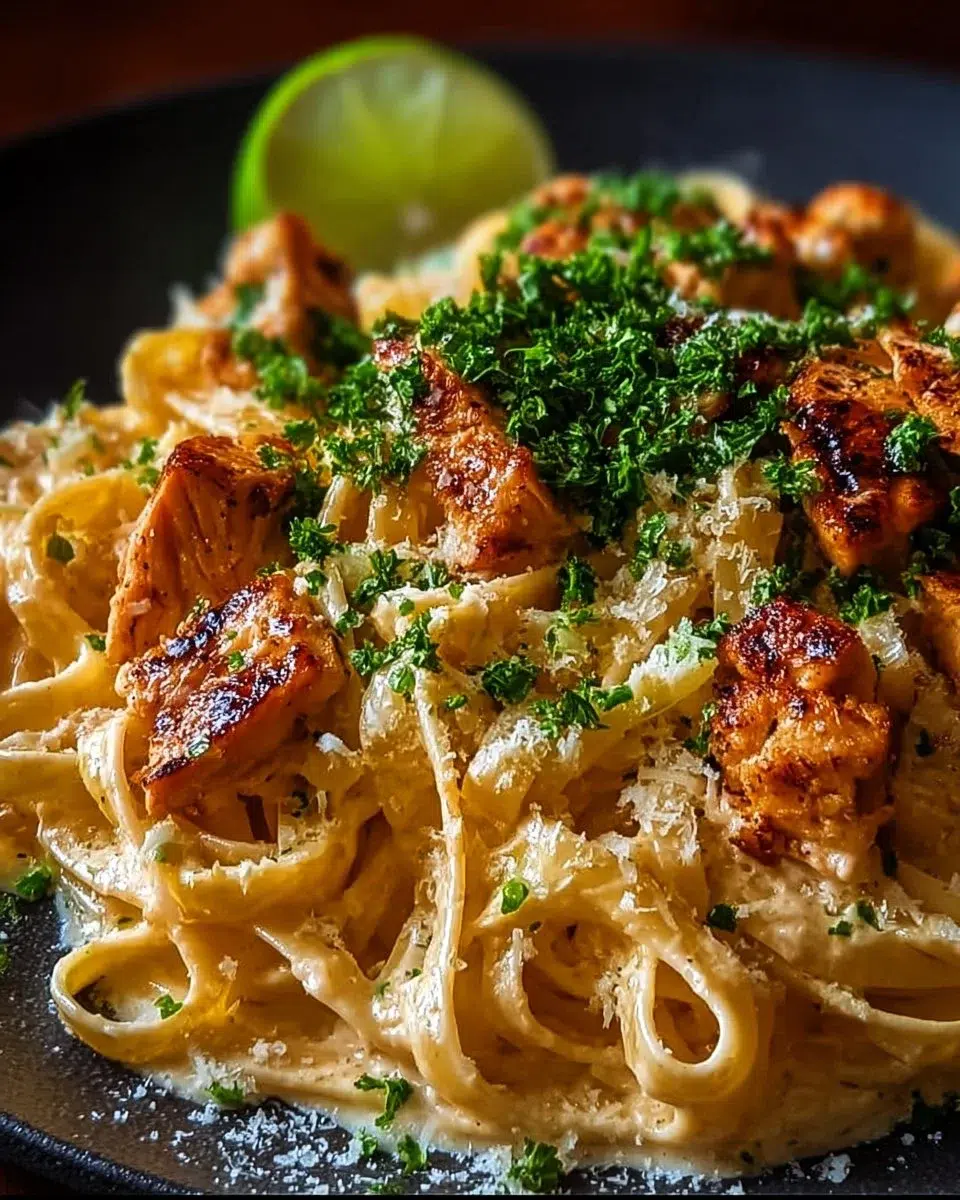
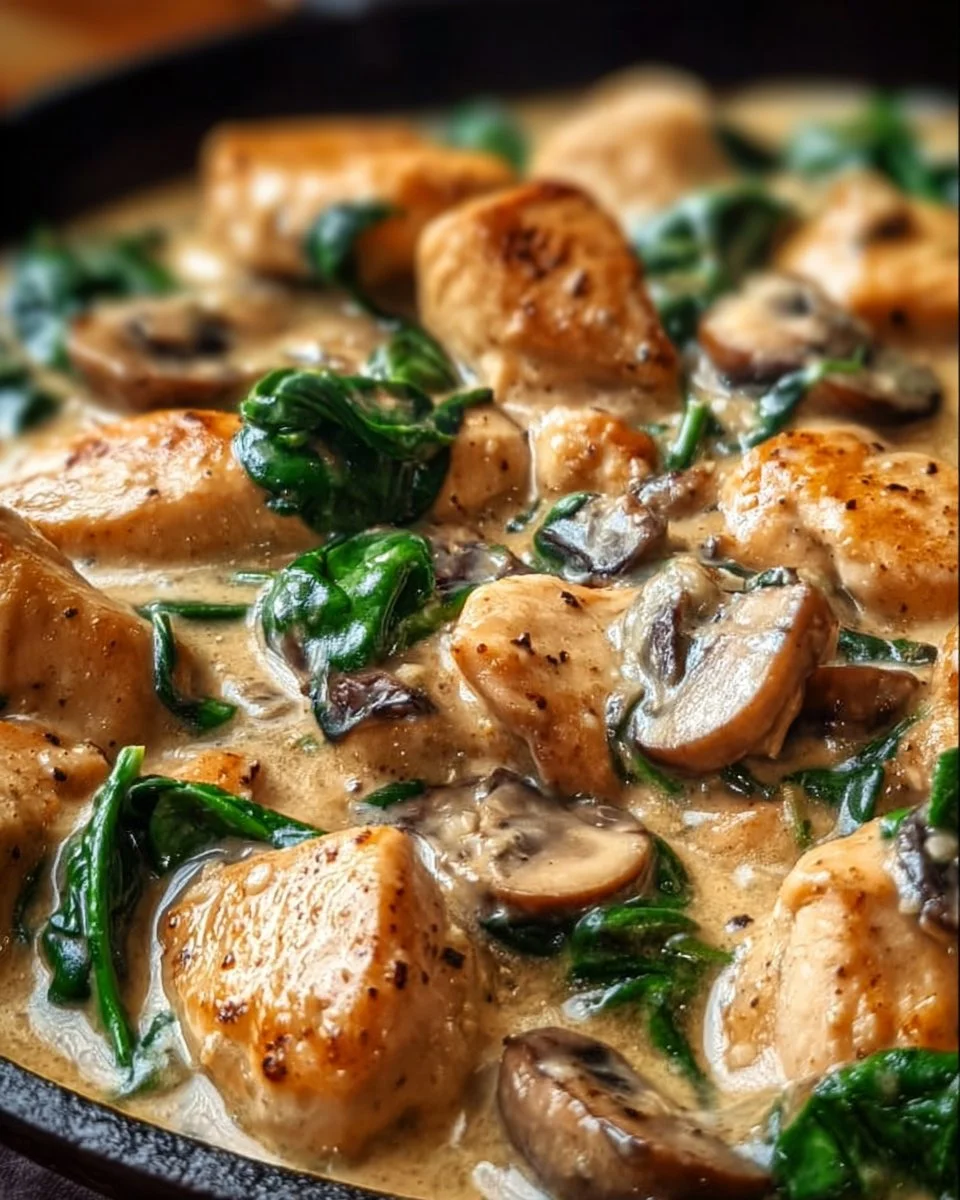
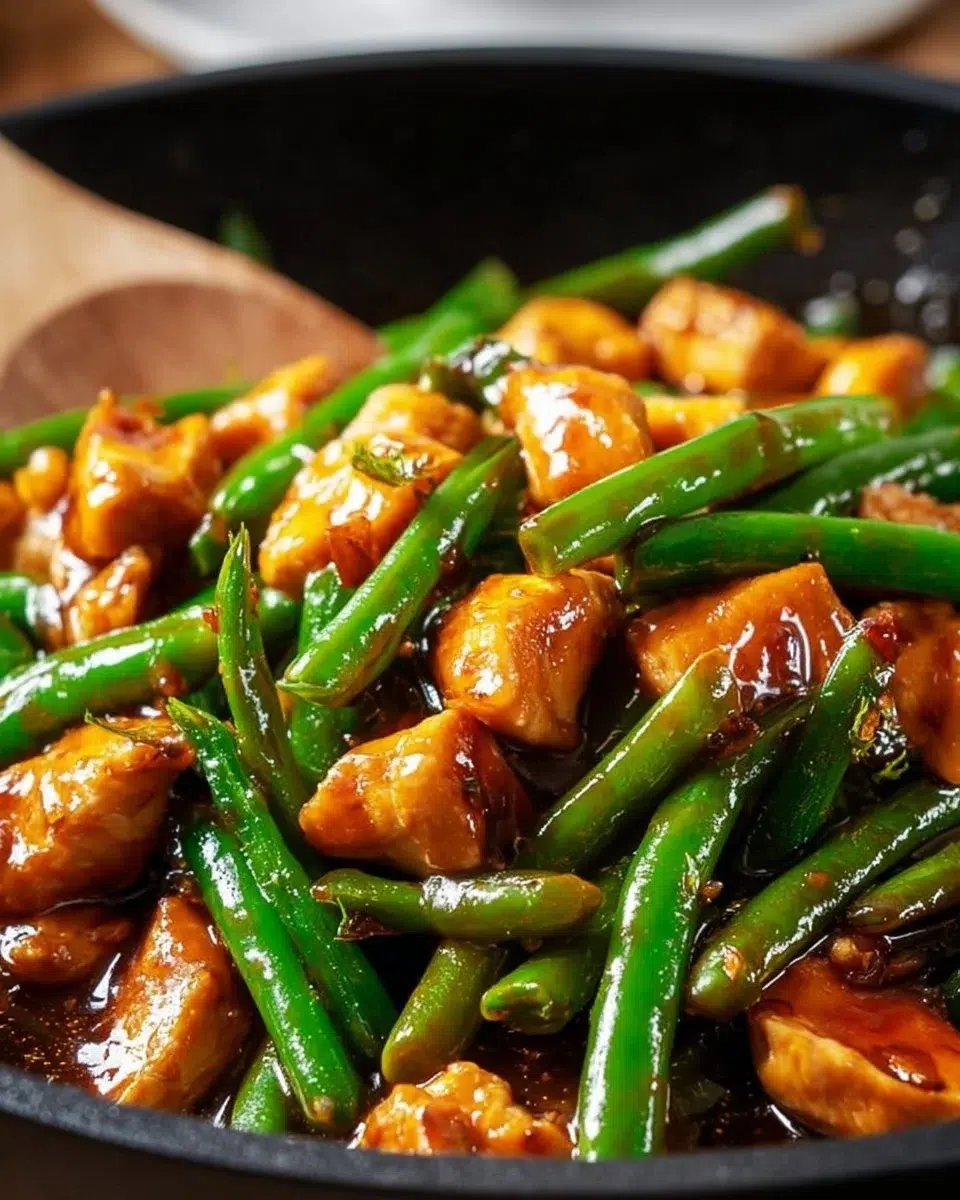
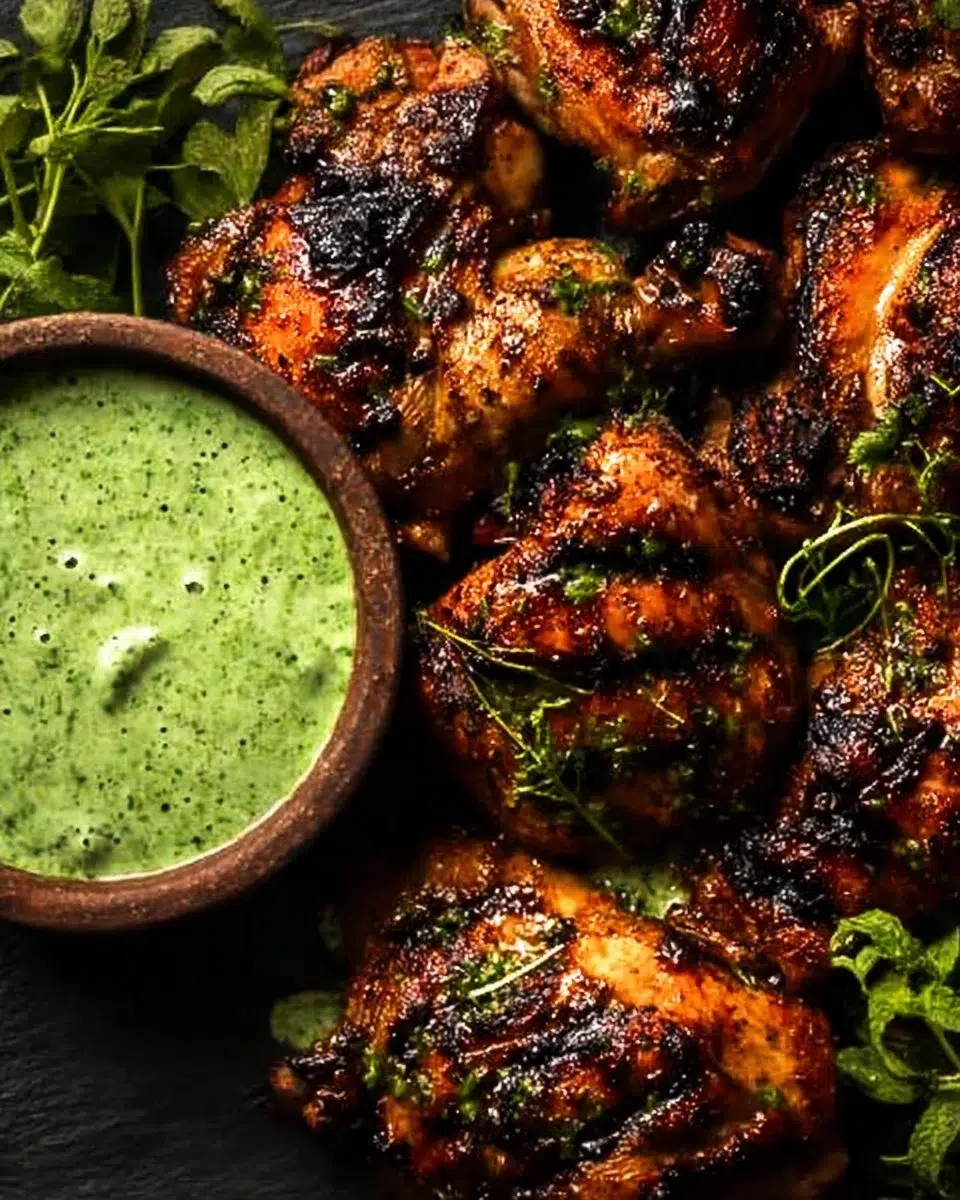
Warm with Asian Chicken guide: A warm, fast, irresistible bowl to master 🍜
Ready for the most delicious Warm with Asian Chicken guide that takes just minutes to transform weeknight dinners? You’ll absolutely love how simple ingredients—garlic, ginger, chicken, noodles, and greens—become an incredible, comforting meal. This guide gives you quick, easy, healthy, and budget-friendly steps so you can serve a game-changing bowl tonight.
In the next pages you’ll learn the cultural roots of Asian-style warm chicken bowls, a complete concept breakdown (including smart substitutions), a foolproof step-by-step method, pro tips, troubleshooting, and creative variations. Whether you’re a beginner or looking for expert-level tweaks, this Warm with Asian Chicken guide explains everything clearly and practically. Let’s get started. 🇨🇳🍲
(Note: La taille de la police des titres et des paragraphes doit être respectée — keep headings and paragraphs clean for mobile readers.)
Attributes Origin & Cultural Context (H2) 🌏
Warm chicken bowls with Asian flavors are rooted in centuries of East and Southeast Asian cooking traditions where broths, noodles, and delicate aromatics are central. In many cultures, warm chicken soups and noodle bowls were both medicine and comfort—used to restore energy after illness or long workdays. Think homestyle Chinese chicken soups, Japanese ramen broth traditions, and Southeast Asian noodle bowls that blend sweet, salty, and umami notes.
A family story: my grandmother would simmer a simple chicken broth with ginger and green onions whenever someone felt under the weather. That bowl—aromatic, restorative, and satisfying—became the inspiration for the streamlined Warm with Asian Chicken recipe I share here. What makes this version special is the balance: quick searing for texture, a fragrant garlic-ginger base, and the satisfying chew of noodles finished with bright greens.
Regional variations include a clearer, lighter Chinese-style broth; a miso-tinged Japanese spin; or a Thai-inspired version with lime and fish sauce. Want to explore similar profiles? Try this hearty chicken bhuna for spice-forward techniques applied to chicken.
Keywords woven naturally: Traditional Warm with Asian Chicken guide, Authentic Warm with Asian Chicken origin, Classic Warm with Asian Chicken history.
Why This Warm with Asian Chicken Guide is a Game-Changer (H2) ⚡
This Warm with Asian Chicken guide is built to be fast, budget-friendly, family-approved, and highly customizable. Here’s why it works.
- Lightning Fast: The method relies on efficient searing and a short simmer—total active cook time is about 25–30 minutes. You learn how to understand Warm with Asian Chicken at home easily and get dinner on the table without compromises.
- Budget-Friendly: Uses pantry staples—soy sauce, sesame oil, chicken broth, and dried noodles—so you can make satisfying meals without specialty purchases. Free resources like local veggie swaps and leftover proteins keep costs lower.
- Family Approved: Mild but flavorful, this approach suits kids and adults alike. Adjust spice by adding chili oil at the table for adult palates. This is one of the best Warm with Asian Chicken guides for beginners because it minimizes technique complexity.
- Nutritiously Delicious: Lean protein, fiber from greens, and a broth base mean a comforting meal that supports digestion and mental wellbeing—there’s a small psychological benefit to warm, savory meals after stressful days. Studies show warm-food rituals improve comfort and reduce anxiety short-term.
- Infinitely Customizable: Swap proteins, noodles, and veggies easily. The guide includes contextual swaps so you can adapt for personal, professional, or pantry-limited contexts. Search “Quick Warm with Asian Chicken guide” or “Expert-level Warm with Asian Chicken at home” to see variations.
- Pantry-Friendly: You can keep a jar of sesame oil, soy sauce, and stock as your flavor backbone—these are the building blocks for many quick Asian-inspired dishes.
Why this guide over others? It focuses on sensory cues (what to look, smell, and hear), timing precision, and simple hacks to elevate texture—like searing the chicken to develop crust, then finishing in broth so it stays tender. This is a quick Warm with Asian Chicken learning method that scales from single portions to family batches.
Complete Concept Breakdown (H2) 🧠
Essential concepts for Warm with Asian Chicken are organized so you can learn and apply them quickly.
Main concepts:
- Flavor Base: Garlic + ginger + sesame oil + soy sauce + stock. This is your umami core.
- Texture Contrast: Sear chicken for Maillard flavor, then simmer—creates both caramelized notes and tenderness.
- Noodle Timing: Add noodles at the right moment so they’re al dente—avoid overcooking for best mouthfeel.
- Greens Finish: Fold in spinach or bok choy just before serving to preserve color and nutrients.
- Seasoning Balance: Salt (soy), acid (lime optional), sweet (a pinch of sugar or mirin), heat (chili flakes).
Enhancers (examples, analogies):
- A splash of rice vinegar is like a freshening brushstroke—brightens the bowl.
- Toasted sesame seeds add a nutty finish like a crisp breadcrumb on a savory cake.
Optional add-ins:
- Mushrooms, sliced bell peppers, soft-boiled eggs, chili oil, miso paste.
Applications and examples:
- Weeknight solo bowl: halve the recipe and cook quicker.
- Family-style pot: double ingredients and serve from the pot.
- Batch meal: make broth in advance and drop in noodles when reheating.
Warm with Asian Chicken concept substitutions — a handy table:
| Concept | Default | Substitute | Why it works |
|—|—:|—|—|
| Chicken | Boneless thighs | Chicken breast or tofu | Thighs = juicier; tofu for veg option |
| Noodles | Egg noodles | Rice noodles or udon | Adjust chew and gluten needs |
| Soy sauce | Regular | Tamari or low-sodium soy | Tamari = gluten-free; low-sodium controls salt |
| Sesame oil | Toasted | Peanut oil (neutral) | Sesame imparts nutty finish; alternatives for allergies 🌰🚫 |
Where to learn deeper: cookbooks on broth fundamentals, online noodle technique videos, and savory flavor-building articles. For contrasting cultural techniques, consider exploring grilled profiles like chicken shawarma grilled wraps to see spice layering applied differently.
Substitution examples:
- Personal vs Professional: Home cooks can use rotisserie chicken to cut time; professional chefs might roast bones for a richer stock.
- Availability alternatives: No spinach? Use frozen peas or kale (add earlier).
- Simplified options: Use pre-minced garlic for speed.
- Depth modifications: Add 1–2 tbsp miso for a deeper umami.
Tips:
- Taste as you go; balance is personal.
- Keep a small bowl of finishing flavors (lime, soy, chili) for diners to customize.
Keywords used: Essential concepts for Warm with Asian Chicken, Best examples for Warm with Asian Chicken, Warm with Asian Chicken concept substitutions.
Required Tools & Resources (H2) 🛠️
Essential tools:
- Large pot or Dutch oven (for simmering)
- Heavy skillet (for searing)
- Sharp knife and cutting board
- Tongs or slotted spoon
- Measuring spoons and cups
Nice-to-have:
- Immersion blender (for silky broths)
- Fine mesh strainer (for clear stock)
- Kitchen thermometer (check chicken to 165°F / 74°C)
Budget alternatives:
- Use a heavy stainless steel pan instead of a skillet.
- Wooden spoon instead of tongs.
- Store-bought low-sodium chicken broth if you can’t make stock.
Specific recommendations:
- A 5–6 quart Dutch oven is versatile; cast iron retains heat and helps maintain simmer.
- Nonstick skillet is fine for quick sears, but stainless steel offers better browning.
Resource link for a different chicken technique: if you love saucy, glazed chicken, check a coconut-tinged option like coconut chicken with sweet chili sauce for inspiration on finishing sauces.
Foolproof Step-by-Step Learning Process (H2) 🧭
Follow these steps to master Warm with Asian Chicken. Each step includes timing, sensory cues, pro tips, and common mistakes to avoid.
Step 1: Prep your ingredients (10 minutes)
- Action: Mince garlic and ginger, slice carrots, chop greens, and measure soy sauce and broth.
- Visual cue: Ingredients laid out in bowls (mise en place) — color contrast helps.
- Pro tip: Mince garlic fresh; it gives a brighter, fresher aroma than jarred.
- Common mistake: Skipping prep leads to rushed cooking and overcooked noodles.
Step 2: Sear the chicken (10 minutes)
- Action: In a heavy skillet over medium-high, drizzle sesame oil and sear chicken until golden (about 5 minutes per side).
- Sensory cue: Listen for steady sizzle and watch for golden-brown crust.
- Pro tip: Pat chicken dry before searing to maximize browning.
- Mistake to avoid: Crowding the pan (lowers heat and prevents browning).
Step 3: Build the aromatics (2 minutes)
- Action: Add minced garlic and ginger to the skillet; cook until fragrant (~1 minute).
- Cue: The aroma should bloom—aromatic, warm, and slightly sharp.
- Pro tip: Stir constantly; garlic burns quickly and becomes bitter.
Step 4: Add broth and soy, simmer (10–12 minutes)
- Action: Pour in chicken broth and soy sauce; bring to a gentle boil, reduce to simmer. Add sliced carrots and simmer until tender (~10 minutes).
- Visual cue: Simmer bubbles should be gentle; chicken should finish cooking through.
- Pro tip: Tilt the pan to baste the chicken with broth for extra flavor.
- Common mistake: Boiling too hard—this toughens meat and makes broth cloudy.
Step 5: Noodle timing (6–8 minutes)
- Action: Stir in egg noodles and cook according to package instructions until al dente (approx 6–8 minutes).
- Cue: Test a strand—should have slight bite (al dente).
- Pro tip: If using dried rice noodles, soak separately to prevent sticking; udon will take slightly longer.
- Mistake: Adding noodles too early causes them to disintegrate when reheating.
Step 6: Add greens and finish (1–2 minutes)
- Action: Just before serving, fold in chopped spinach or bok choy until wilted.
- Cue: Bright green and glossy leaves indicate done.
- Pro tip: Add a splash of soy or sesame oil at the end for sheen and aroma.
Step 7: Plate and garnish (2 minutes)
- Action: Serve hot topped with sliced green onions and optional sesame seeds.
- Pro tip: Fresh lime wedges and chili oil on the side let everyone customize.
Total active time: ~30–35 minutes. This step-by-step is ideal for an easy Warm with Asian Chicken learning experience.
H3: Building the Base
- Focus on stock quality. If using store-bought broth, enhance with a piece of dried kombu, a smashed garlic clove, or a teaspoon of miso for depth.
H3: Application Techniques Explained
- For meal prep: undercook noodles slightly and reheat by adding hot broth; noodles will finish cooking and remain resilient.
H3: Integration Methods
- For leftovers: store broth and solids separately; combine and reheat gently to avoid mushy noodles.
H3: Final Reflection
- Taste and adjust salt and acid. Warm bowls often benefit from a bright finish—lime or rice vinegar.
Expert Insights & Strategies (H2) 👩🍳
6 pro techniques from chefs and food scientists:
- Layer flavors early: sweat aromatics in oil to release essential oils—this builds a foundational aroma that infuses the broth.
- Maillard = memory: searing chicken creates flavor compounds that make the broth taste richer even after simmering.
- Timing is everything: add noodles last. Chefs avoid noodle sogginess by controlling final-stage cooking.
- Texture contrast: use one soft component (noodles) and one textural pop (seared chicken or toasted seeds).
- Temperature control: reduce to a gentle simmer after boiling—protein relaxes and stays tender.
- Finishing oils: a small drizzle of toasted sesame oil or chili oil at service brightens flavors dramatically.
Common failures and solutions:
- Problem: Flat-tasting broth. Solution: Increase umami with a splash of soy, fish sauce, or a teaspoon of miso.
- Problem: Soggy noodles. Solution: Time noodles separately or add them at the very end of reheating.
- Problem: Over-salty final dish. Solution: Dilute with hot water or extra broth and balance with acid (lime/vinegar).
Professional-style tricks:
- Make a concentrated chicken reduction and freeze in ice cube trays for quick flavor boosts.
- Toast whole garlic cloves before mincing for a sweeter, mellow aroma.
Timing optimization:
- If prepping ahead, cool broth quickly and refrigerate; reheat gently to preserve clarity and flavor.
For broader inspiration, compare texturing approaches in more roast-focused recipes like stuffed roast chicken which highlight how temperature and stuffing ingredients can change moisture dynamics.
Creative Variations & Adaptations (H2) 🎨
Warm with Asian Chicken variations let you adapt across contexts:
Contextual variations:
- Japanese-style: Add miso and a soft-boiled egg; use udon.
- Thai-style: Finish with fish sauce, lime, and cilantro; swap in rice noodles.
- Chinese-style: Keep it light—clear broth, bok choy, and thinly sliced chicken breast.
Application modifications:
- Personal (single-serve): Reduce portion sizes, use pre-cooked chicken.
- Professional (catered): Prepare concentrated stock and hold components separately for quick assembly.
- Vegetarian: Replace chicken with marinated tofu and use mushroom stock.
Cultural twists:
- Korean: Add gochujang and kimchi on the side for heat and complexity.
- Vietnamese: Add star anise and fish sauce for a pho-inspired aroma.
Practical transformations:
- Turn into a wrap: Shred the cooked chicken, toss in sauce, and wrap with greens and noodles.
- Salad bowl: Chill the noodles and chicken, toss with sesame dressing for a warm-to-cool contrast.
Scalable versions:
- Double the broth for batch freezing.
- Make a concentrated base, freeze in containers for quick weekday bowls.
Keywords included: Warm with Asian Chicken variations, Different ways to apply Warm with Asian Chicken, Customizable Warm with Asian Chicken guide.
Breakdown & Benefits Analysis (H2) 📊
Per Application (makes X insights):
Solo Weeknight Bowl:
- Impact: High comfort level
- Depth: Moderate
- Relevance: 9/10
- Flexibility: 8g (easy swaps)
Family Pot:
- Impact: Very high (feeds many)
- Depth: Deep flavor when simmered longer
- Relevance: 10/10
- Flexibility: 9g (lots of add-ins)
Meal Prep Batch:
- Impact: High convenience
- Depth: Moderate (noodle texture needs care)
- Relevance: 8/10
- Flexibility: 7g
Benefits of key concepts:
- Searing + simmering yields both flavor and tenderness.
- Quick noodle timing preserves texture and freshness.
- Greens preserve nutrients and provide color/contrast.
Considerations:
- Allergen notes: sesame, soy, gluten (if using wheat noodles). Use tamari and rice noodles for gluten-free.
- Shelf life: Broth refrigerated 3–4 days, noodles best consumed within 1–2 days when combined.
Adaptation-friendly modifications:
- For low-sodium diets, use low-sodium broth and tamari; boost flavor with citrus and fresh herbs.
Enhancement highlights:
- A finishing drizzle of chili oil gives aroma without overpowering.
- Toasted sesame seeds add texture and visual appeal. ✨
Motivational benefits:
- Easy wins build kitchen confidence; mastering this bowl opens doors to other brothy comfort dishes.
Storage, Application & Learning Prep (H2) 🧾
Proper retention methods:
- Note-taking: Keep a small cooking journal—record timing and noodle brand adjustments.
- Memory aids: Use sensory notes (e.g., “garlic fragrance when sizzling, golden sear after 5 minutes”).
Best tools for retention:
- Smartphone photos of each step.
- Labelled containers for broth portions.
Application techniques for optimal use:
- Store broth separately from noodles and greens for maximum shelf life and texture control.
- Reheat gently on the stove; bring to a simmer—avoid vigorous boiling.
Learning prep strategies:
- Practice once with your preferred noodle brand to calibrate cooking time.
- Try the recipe once as written, then experiment with one substitution at a time.
How long knowledge lasts:
- Once you internalize the timing and sensory cues, you’ll be able to recreate it reliably. Most cooks report confidence after 2–3 tries.
SEO phrases included: How to retain Warm with Asian Chicken knowledge, Can you apply Warm with Asian Chicken long-term, Best way to integrate Warm with Asian Chicken, Warm with Asian Chicken learning prep ideas.
Troubleshooting Common Issues (H2) 🛟
Problem: Broth tastes flat.
- Solution: Increase umami—add a teaspoon of miso, a splash of soy, or a small piece of dried kombu; finish with acid.
Problem: Chicken is tough or dry.
- Solution: Reduce heat; finish cooking chicken in the simmering broth rather than over high heat.
Problem: Noodles are mushy after reheating.
- Solution: Store noodles separately and add fresh when reheating, or undercook noodles slightly the first time.
Problem: Soup is too salty.
- Solution: Dilute with water or unsalted broth; add a squeeze of lime or a small potato while simmering to absorb salt (remove potato before serving).
Problem: Lack of brightness.
- Solution: Add fresh herbs, sliced scallions, or a splash of vinegar or lime at the end.
Comprehensive FAQ Section (H2) ❓
Q1: Can I apply this Warm with Asian Chicken guide universally?
A: Yes—the framework (sear + aromatics + simmer + noodles + greens) adapts to many cultural styles. Use appropriate condiments to match the cuisine.
Q2: How far in advance can I prepare for Warm with Asian Chicken?
A: Prepare broth up to 3–4 days ahead (refrigerated) or freeze for 3 months. Keep noodles and greens separate until serving.
Q3: What’s the best way to integrate Warm with Asian Chicken insights into meal planning?
A: Make a big stock pot on the weekend and portion it. Label jars with suggested add-ins (noodles, greens, proteins).
Q4: Can I adapt this Warm with Asian Chicken guide for dietary restrictions?
A: Absolutely—swap chicken for tofu or tempeh for vegetarian, use tamari and rice noodles for gluten-free, and reduce sodium for low-salt diets.
Q5: Is this Warm with Asian Chicken guide beginner-friendly?
A: Yes—this is designed as the best Warm with Asian Chicken guide for beginners, with clear sensory cues and short steps.
Q6: How do I make the broth richer without long simmer times?
A: Boost umami with miso, soy, or a splash of fish sauce. A seared chicken carcass can be simmered for 45–60 minutes if you have the time.
Q7: What’s the best noodle choice?
A: Egg noodles for classic chew; rice noodles for lighter bowls; udon for a chewier, heartier texture.
Q8: How can I scale this for entertaining?
A: Double broth and vegetables, sear larger chicken cuts, and let guests customize bowls with condiments on the side.
(FAQ addresses search intent and common user questions while keeping answers practical and brief.)
Related Guides & Applications (H2) 🔗
If you enjoyed this guide, here are complementary resources and learning paths:
- Explore crusted, pan-seared techniques in crusted chicken romano for more searing science.
- For smoky, spiced variations, check out the shawarma-style approach noted earlier.
- Interested in slaws and warm salads? The texture contrasts in warm slaws pair well with protein-centered dishes.
- Broader path: Broth fundamentals → noodle timing → finishing techniques → custom condiments.
Quick pairings: side pickles, steamed buns, or a simple green salad.
Summary Card & Reference Version (H2) 🗂️
Quick concept list:
- Core: garlic + ginger + sesame oil + soy + broth
- Texture: sear chicken, simmer, add noodles late
- Finish: greens + scallions + sesame seeds
Learning time summary:
- Prep: 10 minutes
- Cooking: 20–30 minutes
- Total: ~30–40 minutes
Condensed reference:
- Step 1: Prep ingredients
- Step 2: Sear chicken (5 min/side)
- Step 3: Add aromatics (1 min)
- Step 4: Add broth + soy, simmer with carrots (10 min)
- Step 5: Add noodles (6–8 min)
- Step 6: Fold in greens + garnish
Save this card and reuse it as your go-to checklist. ✅
Conclusion & Reader Engagement (H2) 🎯
You’ve now got a complete Warm with Asian Chicken guide—from cultural roots and core concepts to step-by-step practice, troubleshooting, and creative variations. Try the recipe tonight: follow the timing cues, taste as you go, and adjust with simple swaps. Share your outcomes—kitchen experiments are how mastery grows.
If you want a slightly different finished dish with a warm slaw and sticky teriyaki flavors, see this warm slaw and slow-cooker approach in "Warm Asian Slaw with Slow Cooker Teriyaki Chicken" for another comforting route: Warm Asian Slaw with Slow Cooker Teriyaki Chicken – Destination Delish. For a brothier, noodle-forward comfort classic, compare techniques in "Asian Chicken Noodle Soup" here: Asian Chicken Noodle Soup – West of the Loop.
Now it’s your turn: drop a comment below with your insights, tag us on social media @yourhandle, or bookmark this guide for your next cozy night in. Happy cooking—and may your kitchen always smell like garlic and ginger. 🍽️🔥
Author note: If you liked the stepwise clarity here, try riffing on proteins and noodle types—it’s the fastest route from beginner to confident home cook.
Print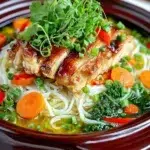
Warm with Asian Chicken
- Total Time: 35 minutes
- Yield: 4 servings 1x
- Diet: Gluten-Free (if using tamari and rice noodles)
Description
A warm, fast, and irresistible bowl featuring chicken, noodles, and greens with Asian flavors, perfect for quick weeknight dinners.
Ingredients
- 1 lb boneless chicken thighs
- 2 tbsp sesame oil
- 4 cloves garlic, minced
- 1 inch ginger, minced
- 4 cups chicken broth
- 2 tbsp soy sauce
- 2 cups egg noodles
- 1 cup carrots, sliced
- 2 cups spinach or bok choy
- Salt and pepper to taste
- Chili oil for serving (optional)
- Green onions for garnish
- Sesame seeds for garnish
Instructions
- Prep your ingredients: mince garlic and ginger, slice carrots, chop greens, and measure soy sauce and broth (10 minutes).
- In a heavy skillet, heat sesame oil and sear chicken until golden brown (about 5 minutes per side) (10 minutes).
- Add minced garlic and ginger to the skillet; cook until fragrant (1 minute).
- Pour in chicken broth and soy sauce; bring to a boil, then reduce to simmer. Add sliced carrots and cook until tender (10 minutes).
- Stir in egg noodles and cook according to package instructions until al dente (approx 6-8 minutes).
- Fold in chopped spinach or bok choy just before serving until wilted (1-2 minutes).
- Serve hot topped with sliced green onions and optional sesame seeds (2 minutes).
Notes
Customize with different proteins, noodles, or vegetables to suit your preference.
- Prep Time: 10 minutes
- Cook Time: 25 minutes
- Category: Main Course
- Method: Stovetop
- Cuisine: Asian
Nutrition
- Serving Size: 1 serving
- Calories: 400
- Sugar: 6g
- Sodium: 600mg
- Fat: 14g
- Saturated Fat: 3g
- Unsaturated Fat: 9g
- Trans Fat: 0g
- Carbohydrates: 45g
- Fiber: 4g
- Protein: 24g
- Cholesterol: 80mg