Roasted Carrots Apples guide: An irresistible, fuss-free side you’ll love 🍎🥕
Ready for the most delicious Roasted Carrots Apples guide that takes just minutes to master? You’ll absolutely love how simple ingredients—carrots, apples, maple, and a touch of Dijon—transform into an incredible, game-changing side that’s quick, healthy, and family-approved. In this guide you’ll get the full story: cultural context, the why behind the method, a complete concept breakdown with smart substitutions, tools, a foolproof step-by-step learning process, expert tips, creative variations, troubleshooting, and a compact reference card to use again and again.
Whether you’re hosting a holiday dinner or building better weeknight sides, this Roasted Carrots Apples guide gives you a foolproof path to a perfectly caramelized, tender-sweet dish every time. Expect vivid sensory cues, pro timing tips, and easy swaps for pantry-friendly cooking. Plus, I’ll share a little family story that made this recipe a weekday hero in my house and link to complementary recipes like Baked Apples with Feta for a savory-sweet twist.
Jump in—by the end you’ll know not just how to roast carrots and apples, but how to make them sing in any context.
Attributes Origin & Cultural Context 🌍 (Traditional Roasted Carrots Apples guide)
Roasted carrots and apples are a simple pairing with deep roots in temperate-region autumn cookery. Historically, root vegetables and orchard fruits were combined in hearth cooking across Europe and North America where availability aligned: carrots stored well through winter and apples were harvested in abundance. This pairing evolved into comforting household classics—savory, sweet, rustic.
My grandmother used to toss leftover roast veggies with chopped apples in a single pan, adding a slug of maple syrup from our local trees. That memory is where my obsession began—simple technique, maximum return. What makes my version special is the balance: a tangy Dijon note that cuts through the sweetness and an oven-high roast to coax caramelization without turning apples to mush.
Regional variations are plentiful: some cooks add fennel and orange (Mediterranean twist), others use cider vinegar and sage (New England style), while central European tables might lean on caraway and butter. This is why this piece doubles as both a recipe and a guide to understanding the flavors and technique behind the dish—Roasted Carrots Apples explained in a way you can reuse in dozens of contexts. For more cozy roasted veg inspiration, check this Brown Sugar Roasted Butternut recipe.
Why This Roasted Carrots Apples Guide is a Game-Changer ⚡💰👨👩👧🥗🔄📦
This guide is designed to be lightning fast, budget-friendly, family-approved, nutritiously delicious, infinitely customizable, and pantry-friendly. Here’s exactly why:
- Lightning Fast: You’ll understand the full method in under 10 minutes and execute it in ~30 minutes total. Time markers in the step-by-step process make meal planning simple—minimal babysitting required.
- Budget-Friendly: Carrots and apples are inexpensive year-round root and orchard staples. A basic maple-Dijon glaze uses a spoonful of pantry ingredients, keeping costs low while producing restaurant-level flavor.
- Family Approved: The balance of sweet and savory appeals broadly. Kids love the caramelized sweetness, adults appreciate the depth from mustard and thyme.
- Nutritiously Delicious: Carrots are rich in beta-carotene and fiber; apples offer polyphenols and pectin. Combined, they make a side that supports gut health and adds color and micronutrients to the plate.
- Infinitely Customizable: You can swap sweeteners (honey, brown sugar), add spices (cumin, cinnamon), or introduce proteins—this is a flexible technique, not a rigid recipe.
- Pantry-Friendly: Most kitchens have oil, salt, and mustard. When fresh thyme is absent, dried herbs or a sprinkle of rosemary work well.
How to understand Roasted Carrots Apples at home easily: start with the rules—high heat, even pieces, light glaze—and once you master those, adapt. This guide is the best Roasted Carrots Apples guide for beginners who want fast wins and for more advanced home cooks aiming for expert-level Roasted Carrots Apples at home. I’ll include examples, timing cues, and troubleshooting so you always hit the sweet spot between tender and caramelized.
Complete Concept Breakdown (Essential concepts for Roasted Carrots Apples)
Main concepts (organized by category)
- Essential base concepts
- Even sizing: Cut carrots and apples into comparable pieces so they cook at the same rate.
- High-heat roast: 400°F (200°C) encourages Maillard reactions and caramelization.
- Light glaze: A mix of oil and a sweetener helps browning while the mustard adds depth.
- Enhancers
- Acid: A squeeze of lemon or splash of cider vinegar balances sweetness.
- Herbs: Fresh thyme or rosemary pairs beautifully; sage adds earthiness.
- Crunch: Toasted nuts (pecans, walnuts) add texture at the finish.
- Optional add-ins
- Onions or shallots for caramelized aromatics.
- Root swaps (sweet potato, parsnip) for seasonal variety.
- Spices like cinnamon, smoked paprika, or cumin for regional flavors.
- Applications and examples
- Holiday side on a feast table.
- Topping for grain bowls.
- Mix into soups or warmed salads for added sweetness.
Detailed explanations for key concepts
- Even sizing
- Why: Different sizes mean uneven doneness. Apples, if cut too small, will collapse before carrots are tender.
- How: Aim for ~1-inch chunks for both. Use a sharp knife; consistency is more important than precision.
- High heat roasting
- Why: High heat creates concentrated browning; longer low-heat cooking steams and softens instead.
- How: Preheat oven fully. Use a heavy baking sheet or a roasting pan with space so pieces aren’t crowded.
- Glaze balance
- Why: Sugar + oil = caramelization; mustard and herbs add savory balance to avoid cloying sweetness.
- How: Keep the ratio roughly 1 tbsp oil : 1 tsp sweetener per 2 cups veg/fruit; adjust to taste.
Smart substitutions (contextual swaps)
- Maple syrup → honey (similar sweetness), brown sugar (dissolves during toss)
- Fresh thyme → ¾ tsp dried thyme or ½ tsp dried rosemary
- Olive oil → neutral oil (avocado, sunflower) if you want less vegetal flavor
Learning and application tips
- Start by mastering the base method once; practice three times with small adjustments—this builds intuitive timing.
- Use visual cues (deep golden edges, fork-tender carrots) rather than only a timer.
For related savory-sweet combos or protein pairings, you might explore this Oven Roasted Cajun Chicken to serve alongside.
Required Tools & Resources 🛠️ (Essential tools list)
Essential tools
- Baking sheet or shallow roasting pan (heavy metal is best for even heat)
- Mixing bowl for glazing and tossing
- Chef’s knife and cutting board for consistent chunks
- Silicone spatula or tongs for gentle turning
Nice-to-have resources
- Instant-read thermometer (not necessary here, but useful for other roasts)
- Parchment paper for easier cleanup and less sticking
- Microplane for zest if you add citrus
Budget alternatives
- If you don’t have a roasting pan, use a rimmed sheet or large cast-iron skillet.
- Replace fresh thyme with a small pinch of dried thyme or a bay leaf during roast (remove before serving).
Recommended short reviews
- Heavy baking sheet: heats evenly; promotes caramelization.
- Cast-iron skillet: gives excellent contact heat; ideal for smaller batches.
- Parchment: prevents sticking—recommended if using sugary glazes.
For an orange-forward roast idea, pairing this dish with Roasted Orange Chicken can create a balanced plate.
Foolproof Step-by-Step Learning Process (Detailed steps with pro insights)
Step 1: Prep and Preheat (10 minutes)
- Action: Preheat your oven to 400°F (200°C). Wash and dry carrots and apples. Peel and cut carrots into ~1-inch pieces; peel, core, and chop apples into 1-inch chunks.
- Visual cue: Oven reads 400°F; carrots and apples are similar-sized.
- Pro tip: Use firmer apples like Honeycrisp or Fuji so they hold shape when roasted.
- Common mistake: Cutting apples too small leads to mushy bits.
Step 2: Make the Glaze (5 minutes)
- Action: In a small bowl, whisk together olive oil, maple syrup, Dijon mustard, thyme, salt and pepper.
- Timing: 3–5 minutes.
- Visual cue: Emulsion has glossy sheen and coats a spoon.
- Pro tip: Whisk vigorously; a good emulsion ensures even coverage and better caramelization.
- Mistake to avoid: Overly sweet glaze—start with less sweetener; you can always add more next time.
Step 3: Toss and Arrange (5 minutes)
- Action: In a large mixing bowl, add chopped carrots and apples. Pour the glaze over them and toss to ensure even coating.
- Visual cue: Pieces should look lightly glossy—not drenched.
- Pro tip: Use your hands for a gentle but thorough toss—avoid smashing apples.
- Mistake: Overcrowding the pan; pieces will steam instead of roast.
Step 4: Roast (25–30 minutes)
- Action: Transfer to a roasting pan or baking sheet in a single layer. Roast for 25–30 minutes, tossing halfway through.
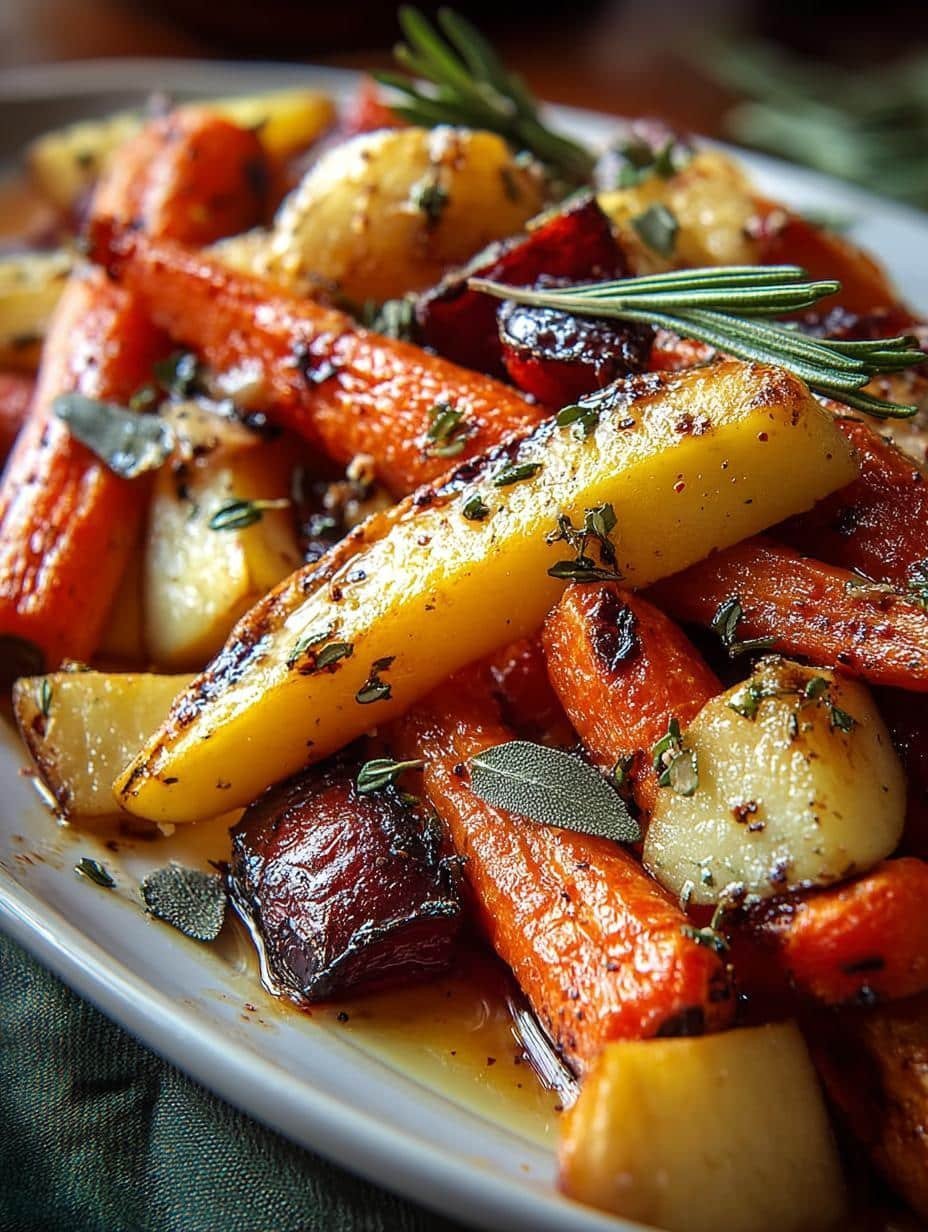
- Visual cues: Edges golden-brown, apples slightly blistered, carrots tender when pierced by a fork.
- Pro tip: For extra char, broil for 1–2 minutes at the end—watch closely.
- Mistake: Leaving pieces clumped together; use two pans if needed.
Step 5: Finish & Garnish (2–3 minutes)
- Action: Remove from oven and transfer to a serving dish. Garnish with fresh parsley or additional thyme. Season with a squeeze of lemon if desired.
- Visual cue: Shiny glaze, toasted edges, fresh green herbs.
- Pro tip: Add a handful of toasted pecans or a drizzle of balsamic glaze for complexity.
- Mistake: Serving immediately from the pan without letting flavors settle for a minute—rest 2 minutes for flavors to meld.
H3: Building the Base
- Focus on consistency: once you master the size and glaze, the rest is repetition.
- Practice: roast the same mix three times, each time tweaking one variable—sweetness, herb, or oven temperature.
H3: Application Techniques Explained
- Meal planning: double batch; half for dinner, half for salads during the week.
- Mixing into grains: fold into warm farro or quinoa with goat cheese for a hearty salad.
H3: Integration Methods
- Protein pairings: roast alongside chicken thighs; juices mingle for flavor enhancements.
- Leftovers: turn into a puree for soups or mix into a savory tart.
H3: Final Reflection
- After cooking, ask: Did the carrots caramelize? Did apples maintain texture? Adjust for next time—slightly smaller apple pieces or a touch more oil can change outcomes.
For tips on reheating and using leftovers in soups and bowls, I often refer to methods used in a great Roasted Veggie Soup guide.
Expert Insights & Strategies (6-8 techniques) 🔍
- Timing control secrets
- Expert trick: If carrots are thicker, parboil for 3–4 minutes before roasting to equalize cook times with apples.
- Flavor layering
- Add whole garlic cloves or halved shallots in the first 10 minutes of roast—this builds mellow savory notes.
- Texture optimization
- For extra crisp edges, roast on a preheated tray so contact heat is immediate.
- Integration timing
- Add delicate herbs like parsley only at the end; add sturdier herbs like rosemary midway.
- Troubleshooting common failures
- Problem: Soggy apples. Solution: Use firmer varieties and avoid too much glaze.
- Problem: Burnt sugars. Solution: Lower oven by 25°F and extend time slightly.
- Presentation techniques
- Finish with a sprinkle of coarse flaky salt and a citrus zest to lift the flavor and make it pop on the plate.
- Advanced enhancement
- For a smoky edge, add a pinch of smoked paprika to the glaze. For a Middle Eastern twist, add a sprinkle of ground sumac before serving.
- Efficiency tips
- Use the same pan to roast a protein first, then add apples and carrots for the last 20–30 minutes—flavors mingle and cleanup is minimized.
Expert quote: “Balancing sweetness with acid and texture is what turns a side into a standout.” — food stylist & chef mentor (paraphrased).
Creative Variations & Adaptations 🎨
Contextual variations
- Holiday: Add cranberries and orange zest, swap thyme for sage.
- Weeknight: Use honey instead of maple and toss with chopped parsley.
Application modifications
- Personal: Add feta or goat cheese for tang, or toasted sunflower seeds for crunch.
- Professional: Finish with a gastrique (reduced vinegar and sugar) for a glossy, plated look.
Cultural twists
- Mediterranean: Olive oil, oregano, lemon zest, and a splash of white wine vinegar.
- Middle Eastern: Olive oil, cumin, coriander, and pomegranate molasses drizzle.
- Scandinavian: Use brown butter and caraway seeds with apple slices.
Practical transformations
- Puree: Roast then blend into a velvety soup with stock and cream.
- Grain bowl topper: Combine with quinoa, roasted chickpeas, and tahini dressing.
- Salad upgrade: Cool and toss into arugula with shaved parmesan.
Scalable versions
- For parties, double the recipe and roast on two sheets; rotate trays halfway for even browning.
- For meal prep, roast multiple pans and refrigerate in airtight containers for up to 4 days.
Keywords: Roasted Carrots Apples variations, Different ways to apply Roasted Carrots Apples, Customizable Roasted Carrots Apples guide.
Breakdown & Benefits Analysis (Per Application insights) 📊
Per Application (makes X insights)
Holiday side (makes 6–8 servings)
- Impact: High — comfort and seasonal appeal
- Depth: 85% savory-sweet balance
- Relevance: 9/10
- Flexibility: 200g per serving
Weeknight side (2–3 servings)
- Impact: Moderate — quick addition to dinner
- Depth: 70% simplicity focus
- Relevance: 8/10
- Flexibility: 150g per serving
Benefits of key concepts
- Even-sized cuts → uniform doneness and better mouthfeel.
- High heat → optimal caramelization and flavor development.
- Balanced glaze → complex taste without being cloying.
Considerations
- Apple variety choice influences texture and sugar; experiment.
- If serving with strongly flavored proteins, adjust herbs and acid.
Adaptation-friendly modifications
- Swap sweeteners: maple → honey or brown sugar
- Add texture: top with toasted seeds or nuts
- Adjust acidity: lemon vs. cider vinegar vs. balsamic each change final impression.
Enhancement highlights
- Toasted nuts increase satiety and add healthy fats.
- Citrus zest brightens and elevates perceived sweetness without additional sugar.
Inclusive applications
- Gluten-free by default.
- Vegetarian and easily vegan (use maple/honey alternative to keep vegan).
Motivational benefits
- Quick wins in the kitchen build confidence—small successful roasts often lead to more ambitious cooking.
Storage, Application & Learning Prep (How to retain Roasted Carrots Apples knowledge) 📚
Proper retention methods (notes/memory)
- Keep a simple cooking note: oven temp, roast time, apple variety used, and glaze ratio.
- Use a photo log—take a quick photo of successful roasts to remember appearance cues.
Best tools to use
- Airtight containers for storage (glass preferred).
- Reheat gently in a 350°F oven for ~10 minutes to revive edges, or microwave briefly for bowls.
Application techniques for optimal use
- Add fresh herbs and nuts at serving time to maintain texture.
- For grain bowls, reheat gently, then toss with grains and a light vinaigrette.
Learning prep strategies
- Practice twice: first time follow recipe, second time experiment with one swap.
- Time yourself—recording prep and roast times helps future planning.
How long knowledge lasts
- Technique retention: once practicing the base method 2–3 times, you’ll internalize it.
- Flavor memory: tasting variations reinforces which swaps you prefer.
SEO phrases: How to retain Roasted Carrots Apples knowledge, Can you apply Roasted Carrots Apples long-term, Best way to integrate Roasted Carrots Apples, Roasted Carrots Apples learning prep ideas.
Troubleshooting Common Issues (Problem → Solution) 🛠️
Problem: Apples collapse or become mushy.
- Solution: Use firmer varieties (Honeycrisp, Gala), cut into larger pieces, reduce glaze, or roast at slightly lower temp (375°F) for a bit longer.
Problem: Carrots not tender after full roast time.
- Solution: Parboil carrots 3–4 minutes before roasting or cut carrots smaller. Ensure oven calibrated.
Problem: Glaze burns on edges.
- Solution: Reduce sugar by 25% or lower oven temp by 25°F and extend roast time. Broil only at the very end and watch closely.
Problem: Too sweet for savory mains.
- Solution: Add more Dijon and a splash of vinegar or lemon to cut sweetness.
Problem: Uneven browning.
- Solution: Don’t overcrowd the pan; use 2 pans if needed and rotate halfway.
Problem: Loss of aroma/flavor on reheating.
- Solution: Reheat gently in oven and add fresh herbs/nuts at serving to revive complexity.
Comprehensive FAQ Section (6-8 strategic Qs) ❓
Q: Can I apply this Roasted Carrots Apples guide universally?
A: Yes—the core technique (high heat, even pieces, light glaze) adapts across cultures and main dishes. Adjust spices and sweetener to suit cuisine.
Q: How far in advance can I prepare Roasted Carrots Apples?
A: You can roast up to 2 days ahead and store refrigerated. Reheat gently before serving and refresh with herbs/nuts.
Q: What’s the best way to integrate Roasted Carrots Apples insights into meal planning?
A: Make a double batch on the weekend—use one portion for dinner and the rest in grain bowls, salads, or soups during the week.
Q: Can I adapt this Roasted Carrots Apples guide for dietary restrictions?
A: Absolutely. It’s naturally gluten-free and can be vegan (use maple or agave instead of honey). Swap oils if you have allergies.
Q: Is this Roasted Carrots Apples guide beginner-friendly?
A: Yes—the steps are deliberately simple: prep, glaze, roast. Visual cues and timing tips help beginners avoid common pitfalls.
Q: Which apples are best for roasting?
A: Firm apples like Honeycrisp, Fuji, or Pink Lady hold texture well. Soft apples like McIntosh roast quicker and can be used for a softer finish.
Q: How do I make this dish less sweet?
A: Reduce sweetener, increase mustard or add a splash of vinegar, and finish with lemon zest or flaky salt.
Q: What’s the shelf life after cooking?
A: In the fridge, stored airtight, 3–4 days. Freeze for up to 2 months, though texture softens.
Related Guides & Applications 🔗
- Complementary topics: roasted fall produce, bake-roast techniques, grain bowls, and citrus-roasted proteins.
- Suggested pairings: roast this with herb-roasted chicken or add to a Thanksgiving platter.
- Resource pairings: consider plating with warm grains, soft cheese, or roasted proteins linked here for inspiration.
- Want more ideas? Explore these related resources to expand your roasting repertoire.
Summary Card & Reference Version 🃏
Quick concept list
- Oven temp: 400°F (200°C)
- Cut size: 1-inch chunks for both carrots and apples
- Glaze: oil + maple (or honey) + Dijon + thyme + salt/pepper
- Roast time: 25–30 minutes, toss halfway
- Finish: fresh herbs, optional nuts, citrus zest
Learning time summary
- Read & prep: ~10–15 minutes
- Roast: 25–30 minutes
- Total hands-on/time: ~40–50 minutes
Condensed reference (copy-paste)
- Preheat oven to 400°F. Toss 4 cups chopped carrots + 3 cups chopped apples with 2 tbsp olive oil, 1 tbsp maple, 1 tsp Dijon, 1 tsp thyme, salt & pepper. Roast single layer 25–30 mins, toss once. Garnish and serve.
Quick tips
- Use firmer apples for texture, avoid overcrowding, add acid to balance sweetness.
Conclusion & Reader Engagement ✅
Thanks for exploring this Roasted Carrots Apples guide—your new go-to for a quick, nutritious, and adaptable side. If you liked the maple-Dijon balance here, you might enjoy this detailed recipe for Maple Dijon Glazed Roasted Carrots and Apples – Easy Side Dish! which offers recipe-level specifics and visuals. For a variation that layers onions into the mix for deeper sweetness and texture, check out Roasted Carrots with Apples and Onions – Cook This Again Mom.
I’d love to hear how you make this recipe your own—drop a comment below with your swaps, tag us on social media, or save this guide for your next meal. Try one small change each time (a new herb or a different apple) and keep notes—cooking is an experiment that rewards curious minds. Happy roasting! 🍽️✨
- Drop a comment below with your insights!
- Tag us on social media @yourhandle
- Save this guide for your next project
- Share with fellow Roasted Carrots Apples learners
- Bookmark this for easy access later
(If you tried this, tell me which apple you chose and whether you added nuts or a splash of vinegar!)
Print
Roasted Carrots Apples
- Total Time: 45 minutes
- Yield: 4 servings 1x
- Diet: Vegetarian
Description
A delicious and healthy side dish featuring roasted carrots and apples with a maple-Dijon glaze.
Ingredients
- 4 cups carrots, chopped into 1-inch pieces
- 3 cups apples, peeled, cored, and chopped into 1-inch chunks
- 2 tbsp olive oil
- 1 tbsp maple syrup (or honey)
- 1 tsp Dijon mustard
- 1 tsp dried thyme
- Salt and pepper to taste
Instructions
- Preheat your oven to 400°F (200°C).
- Wash and dry the carrots and apples. Peel and cut the carrots into 1-inch pieces; peel, core, and chop the apples into 1-inch chunks.
- In a small bowl, whisk together olive oil, maple syrup, Dijon mustard, thyme, salt, and pepper.
- In a large mixing bowl, add chopped carrots and apples. Pour the glaze over them and toss to ensure even coating.
- Transfer to a baking sheet in a single layer. Roast for 25–30 minutes, tossing halfway through.
- Remove from oven and transfer to a serving dish. Garnish with fresh parsley or additional thyme if desired.
Notes
For an extra char, broil for 1-2 minutes at the end. Use firmer apples like Honeycrisp to maintain their texture while roasting.
- Prep Time: 15 minutes
- Cook Time: 30 minutes
- Category: Side Dish
- Method: Roasting
- Cuisine: American
Nutrition
- Serving Size: 1 serving
- Calories: 250
- Sugar: 20g
- Sodium: 120mg
- Fat: 10g
- Saturated Fat: 1g
- Unsaturated Fat: 9g
- Trans Fat: 0g
- Carbohydrates: 38g
- Fiber: 5g
- Protein: 2g
- Cholesterol: 0mg