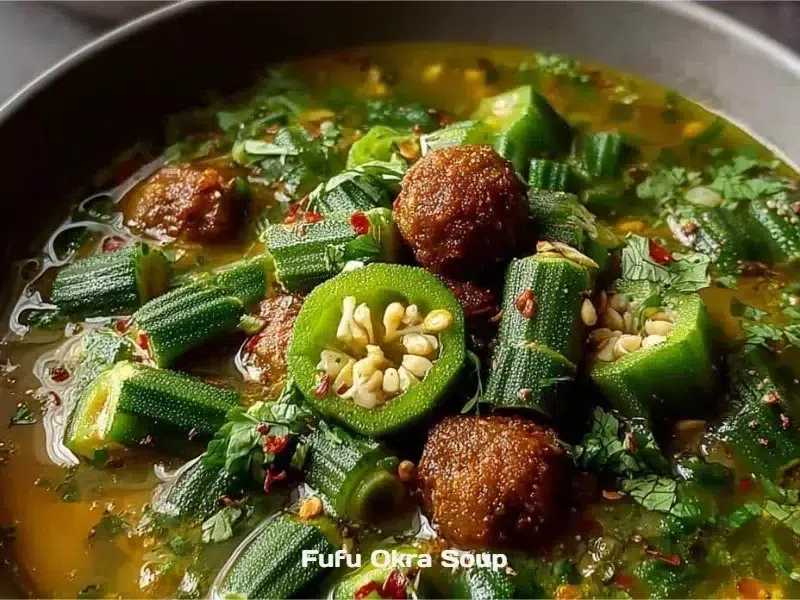
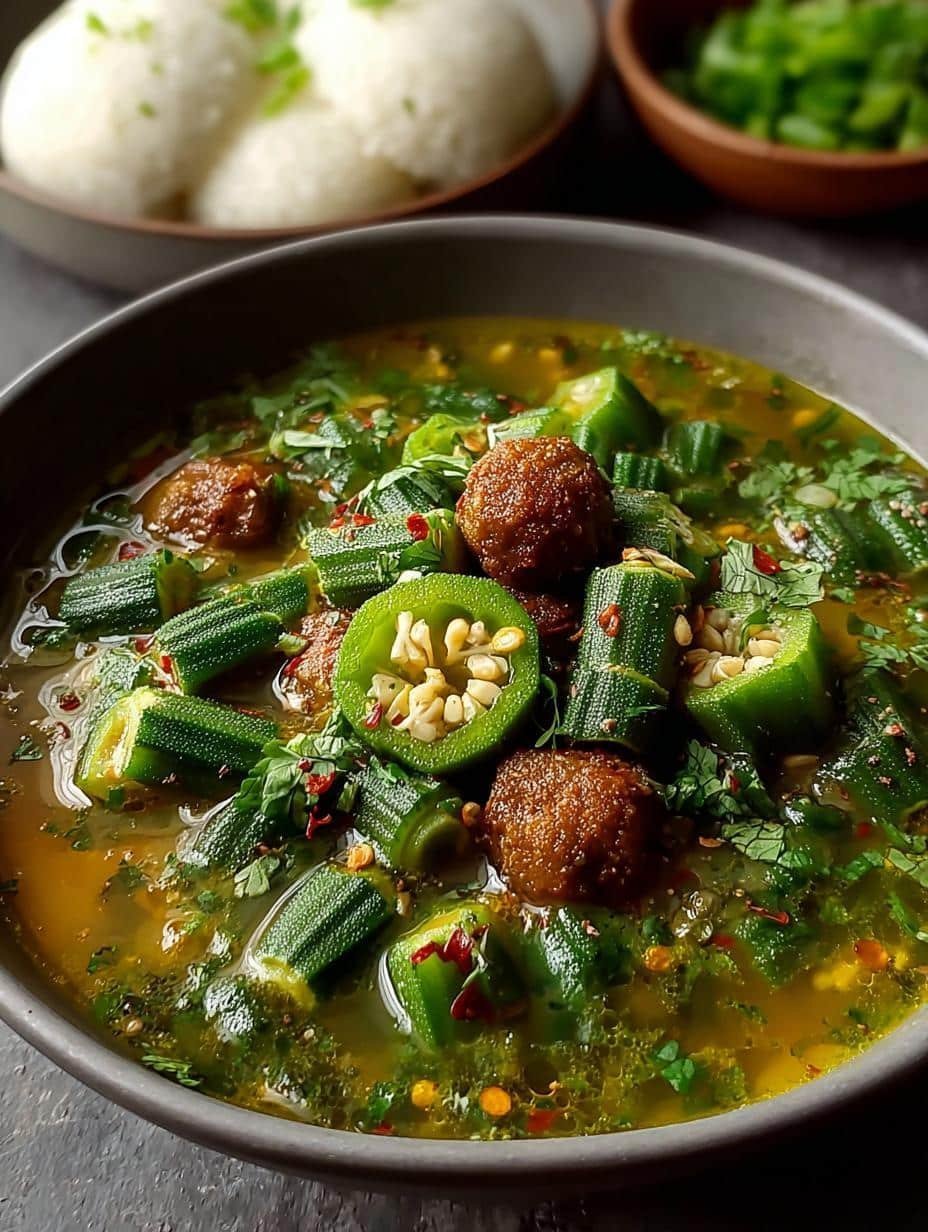
Fufu Okra Soup guide: The Ultimate Easy, Authentic Fufu Okra Soup 🍲
Ready for the most irresistible Fufu Okra Soup guide that turns a traditional favorite into a quick, family-friendly meal? You’ll absolutely love how this Fufu Okra Soup guide breaks down authentic flavors into simple steps you can master in under an hour. Whether you grew up with okra and fufu or you’re trying it for the first time, this guide delivers foolproof techniques, budget-smart tips, and adaptable variations that make learning fun.
In the next few minutes you’ll learn the cultural roots, why this method works, exact tools and a step-by-step learning process, plus creative variations and troubleshooting. By the end, you’ll understand how to prepare authentic Fufu Okra Soup with confidence — from prepping cassava and plantains for smooth fufu to simmering perfectly textured okra soup with savory protein. If you like quick, tasty, and nourishing meals, this guide is for you. (Check related soup inspiration while you read: https://recipeartistry.com/autumn-tortellini-soup-sausage/)
1. Attributes Origin & Cultural Context (H2) 🧭
Fufu Okra Soup has deep West African roots — a staple across Nigeria, Ghana, Sierra Leone and beyond. Fufu itself (a dough-like staple made from cassava, plantains, yam, or millet) is a communal food: made for family gatherings, markets, and celebratory tables. Okra soup, rich and velvety, pairs perfectly with fufu because the smooth, sticky textures make scooping and savoring easy and communal.
My earliest memory of this dish is my aunt’s tiny kitchen in Lagos, where everyone ate from a shared bowl, hands flying, laughter mixing with the scents of smoked fish and palm oil. That family ritual is what makes this version special: I combine traditional techniques with modern shortcuts (blending the cassava and microwaving to speed the fufu) so busy cooks can enjoy the same comfort without hours of prep.
Regional variations: In Nigeria, okra soup often includes ugba (oil bean), stockfish, and crayfish; in Ghana, palm oil and egusi-spiced variants appear; in Sierra Leone, light broths and greens are common. This guide presents a classic, authentic base while showing how to adapt for different palates and ingredient availability.
SEO note: This Traditional Fufu Okra Soup guide blends authenticity with practicality for home cooks. For a lighter take on vegetable soups that share comforting textures, see this butternut recipe: https://recipeartistry.com/butternut-squash-soup-recipe/.
2. Why This Fufu Okra Soup Guide is a Game-Changer (H2) ⚡
This Fufu Okra Soup guide is game-changing because it marries authenticity with modern efficiency. Here’s why:
- Lightning Fast — Learn the essentials and cook a full meal in ~45–60 minutes. The blended-and-microwaved fufu method reduces traditional pounding time without sacrificing texture. How to understand Fufu Okra Soup at home easily? Start with the blended fufu and a pan-simmered okra base — you’ll see the method is surprisingly simple.
- Budget-Friendly — Cassava, plantains, and okra are inexpensive pantry items. Protein can be scaled: use smoked fish, small shrimps, or affordable chicken cuts. The guide includes pantry substitutions to stretch meals.
- Family Approved — Mild, savory, and customizable. Kids enjoy the smooth fufu; adults appreciate the depth of seasoned broth. This is the Best Fufu Okra Soup guide for beginners looking to involve the family.
- Nutritiously Delicious — Okra is high in fiber, vitamins C and K, and plant compounds that support digestion and mood. Combined with cassava and plantain fufu, you get a balanced, energy-rich meal.
- Infinitely Customizable — Swap proteins, change oil types, thicken or thin the soup to taste. The guide explains substitutions and flavor layering so you can become an expert-level Fufu Okra Soup at home.
- Pantry-Friendly — No rare tools required. Basic blender, pot, and a spoon will do. This is an Easy Fufu Okra Soup learning path that scales to beginners and enthusiasts alike.
Long-tail benefits: This is the Quick and easy Fufu Okra Soup guide that doubles as a foundation for mastering Traditional Fufu Okra Soup understanding at home. Expect clear, practical steps, and pro tips that let you move from novice to confident cook.
3. Complete Concept Breakdown (H2) 🔍
Understanding the core concepts turns cooking into confident creativity. Here are the essential ideas behind Fufu Okra Soup.
Main Concept Categories:
- Essential base concepts
- Fufu texture: elasticity, smoothness, moisture balance.
- Okra mucilage: the natural thickener that gives soup its velvet body.
- Stock depth: using bones, smoked fish, or bouillon for savory umami.
- Enhancers (examples, analogies)
- Palm oil for aroma and rich color.
- Crayfish or dried shrimp for concentrated seafood umami.
- Lime or vinegar to brighten heavy palm oil.
- Optional add-ins
- Leafy greens (ugu, spinach), ground egusi, or diced peppers.
- Applications and examples
- Serve as a family dinner, party potluck dish, or hearty lunch.
Detailed explanations:
- Fufu texture: Aim for a smooth, slightly sticky ball. Too dry = crumbly; too wet = gummy. The blending + microwave approach creates a fast gelatinization of starch, producing a near-authentic texture.
- Okra mucilage: When chopped, okra releases polysaccharides that thicken the soup. Simmer gently — overboiling can make it thin and lifeless. If you prefer a thinner soup, lightly sauté okra first to reduce mucilage.
- Stock depth: Use smoked fish or bone broth to layer flavor. If using chicken, sear first for Maillard flavors that enrich the broth.
Smart substitutions:
- Cassava ↔ yam or instant fufu flour (for urgent meals).
- Green plantain ↔ unripe yam (texture variations).
- Palm oil ↔ vegetable oil + smoked paprika (less authentic, still tasty).
- Smoked fish ↔ anchovy paste or bouillon cube (for pantry-limited cooks).
Learning and application tips:
- Start small: Make one cup fufu and one pot of okra to test textures.
- Tasting checkpoints: Taste broth before adding okra; adjust salt and heat.
- Practice scooping: Fufu is traditionally eaten by pinching small balls to dip into the soup — practice the consistency with wet hands.
For additional context on pairings and soup textures, try a lighter stew approach like this cabbage soup technique: https://recipeartistry.com/cabbage-soup-recipe/.
SEO phrases: Essential concepts for Fufu Okra Soup and Fufu Okra Soup concept substitutions are woven throughout this breakdown to help you master the theory and practical swaps.
4. Required Tools & Resources (H2) 🛠️
Essentials:
- Blender or food processor (for blended fufu)
- Large pot (4–6 quart) for soup
- Microwave-safe bowl (if microwaving fufu)
- Wooden spoon and spatula
- Sharp knife and cutting board
Nice-to-have:
- Mortar and pestle (for pounding if you want traditional fufu)
- Fine-mesh sieve (to smooth blended paste)
- Ladle and serving bowl set
Budget alternatives:
- No blender? Use instant fufu flour or boil and mash cassava/plantain thoroughly.
- No microwave? Steam or boil blended fufu on stovetop for slightly longer time.
Specific recommendations:
- Blender: Mid-range 600–800W is enough for cassava/plantain blends.
- Pot: A heavy-bottomed pot reduces scorching and keeps steady simmer.
Resource link for hearty protein-based soups similar in heartiness to okra soup (if you’re exploring texture-rich soups): https://recipeartistry.com/chicken-taco-soup-recipe/
5. Foolproof Step-by-Step Learning Process (H2) 🧑🍳
This section is the heart of the guide — follow each step, practice, and learn through taste.
Step 1: Prepare Ingredients (10 minutes)
- Action: Peel cassava and green plantains; chop into small cubes. Rinse okra, slice into rounds; prep protein (cut chicken into bite-sized pieces, clean fish).
- Sensory cues: Cassava should be starchy and slightly fibrous. Plantain firm and pale green.
- Pro tip: Use gloves if handling hot peppers and wash hands afterward.
- Common mistakes: Not removing cassava’s core fibers — those can be gritty.
Step 2: Blend the Fufu Base (5 minutes)
- Action: Place chopped cassava, plantains, and about 2 cups water in blender. Blend until smooth and pourable.
- Timing: 1–2 minutes depending on blender power.
- Sensory cues: Smooth, lump-free mixture; resembles pancake batter.
- Pro tip: If the blender struggles, add water 1/4 cup at a time.
Step 3: Microwave and Knead Fufu (10-12 minutes)
- Action: Transfer blended mixture to a microwave-safe dish. Cover and microwave on high for 7 minutes. Stir and microwave for an additional 1 minute if needed. Allow to cool slightly, then knead with wet hands to an elastic consistency.
- Sensory cues: Mixture should pull away from the container and form a cohesive ball.
- Pro tip: Wet your hands to prevent sticking; a little oil on palms helps for final shaping.
- Common mistakes: Overcooking results in gummy fufu; undercooking leaves raw starch flavor.
Step 4: Build the Soup Base (10 minutes)
- Action: In a large pot, heat palm oil (or substitute). Sauté onions, garlic, and peppers until translucent. Add proteins (seared chicken or smoked fish), stir to coat.
- Sensory cues: Aromatic onion, light caramelization.
- Pro tip: Sear proteins first to lock in flavor — it makes a huge difference.
Step 5: Add Stock and Simmer (15 minutes)
- Action: Add water or stock, bouillon, and any dried seafood (crayfish, stockfish). Simmer 10–15 minutes to develop flavor.
- Sensory cues: Broth should smell rich and savory. Taste and season accordingly.
- Common mistakes: Under-seasoning early — taste as you go.
Step 6: Add Okra and Finish (8–10 minutes)
- Action: Stir in sliced okra and reduce to a gentle simmer. Cook until okra is tender and the soup thickens slightly from mucilage.
- Sensory cues: Soup thickens and becomes glossy; okra soft but not mushy.
- Pro tip: If you prefer less slime, sauté okra separately before adding.
Step 7: Plate and Serve (2–3 minutes)
- Action: Portion fufu onto plates in small balls; serve hot soup alongside. Garnish with fresh herbs or sliced chilies.
- Sensory cues: Steam rising, fragrant oil, satisfying scoop textures.
- Pro tip: Teach guests to pinch off small fufu portions and use them to sop up the soup — communal eating is part of the joy.
H3: Building the Base
- Focus on texture balance: fufu moisture vs. soup thickness. If soup is too thin, simmer longer; if fufu is crumbly, add a bit of hot water while kneading.
H3: Application Techniques Explained
- Scooping technique: Use thumb to create a small hollow in fufu ball for easier dipping.
- Serving strategy: Offer sides like sliced onions, fresh lime, or a small bowl of ground pepper.
H3: Integration Methods
- Pair with side dishes (greens, plantain chips) or make small individual pots for guests who prefer different spice levels.
H3: Final Reflection
- Taste for balance: spicy, salty, umami, and a touch of acidity. Adjust next time based on what your family liked.
6. Expert Insights & Strategies (H2) 🧠
Here are pro-level techniques and troubleshooting tips gathered from seasoned cooks:
- Texture control: For a more elastic fufu, let the blended mix rest 3–5 minutes before microwaving — it allows starch to hydrate evenly.
- Layered stock: Use a mix of water and a small amount of chicken or beef broth for richer depth without overwhelming the okra flavor.
- Timing strategy: Add delicate greens (spinach) in the final 2 minutes to preserve color and nutrients.
- Flavor anchor: Toast and grind crayfish or dried shrimp for a concentrated savory boost.
- Oil management: If using palm oil, add it at the start for a fuller color; add a drizzle at the end to freshen aroma.
- Slime adjustment: Sautéing okra before simmering reduces mucilage for a less viscous soup.
- Salt scaling: Because fufu and soup absorb salt differently, season the broth gently and adjust after fufu is served.
- Presentation trick: Use a small bowl to shape the fufu into a neat dome for each plate — visually pleasing and practical.
Common failures and solutions:
- Failure: Fufu too dry. Solution: Add a tablespoon of hot water while kneading, fold until smooth.
- Failure: Soup too watery. Solution: Reduce heat and simmer uncovered; alternatively add more chopped okra to thicken naturally.
- Failure: Bland flavor. Solution: Add a splash of fish sauce or a teaspoon of bouillon, but taste first.
Timing optimization:
- Prep everything first (mise en place). Once the fufu is microwaving, you can be simmering the soup — that overlap saves 15–20 minutes.
Enhancement strategies:
- Add roasted nuts or ground seeds for a thicker, nutty variant resembling egusi-okra blends.
- Use smoked meats sparingly to avoid overpowering the okra’s fresh notes.
7. Creative Variations & Adaptations (H2) 🎨
Fufu Okra Soup thrives on adaptability. Here are ways to customize:
Contextual variations:
- Quick weeknight version: Use instant fufu flour and canned chicken broth. Ready in 20–30 minutes.
- Festive version: Add smoked goat, stockfish, and extra crayfish for depth.
Application modifications:
- Personal (low-fat): Use minimal oil, lean protein, and extra greens.
- Professional (restaurant): Plate fufu in quenelles and serve soup in small bowls for a modern presentation.
Cultural twists:
- Ghanaian-style: Boost palm oil and add kontomire (cocoyam leaves) or egusi for texture.
- Nigerian-style: Add ground egusi or ugba, and use crayfish and bitterleaf (or spinach) for authenticity.
Practical transformations:
- Vegan: Replace protein with mushrooms, smoked tofu, and vegetable broth. Use coconut cream for extra richness.
- Gluten-free: Naturally gluten-free, but double-check bouillon cubes.
Scalable versions:
- Batch cooking: Make large pots of soup and freeze portions; fufu is best fresh but you can form small discs and steam-thaw when needed.
- Meal kit: Pre-portion dried crayfish, bouillon, and semi-prepared okra for quick assembly.
For inspiration on vegetable-forward variations and prepping greens, consider this asparagus soup approach: https://recipeartistry.com/asparagus-soup/.
Keywords to include: Fufu Okra Soup variations and Different ways to apply Fufu Okra Soup — both are great starting points for experimentation.
8. Breakdown & Benefits Analysis (H2) 📊
Per Application (makes X insights):
- Family Dinner (makes 4–6 servings)
- Impact: High (comfort and satisfaction)
- Depth: 80%
- Relevance: 9/10
- Flexibility: 400g (protein scalable)
- Quick Weeknight (2–3 servings)
- Impact: Medium-High
- Depth: 65%
- Relevance: 8/10
- Flexibility: 250g
Benefits of key concepts:
- Fufu texture mastery: Encourages hands-on engagement and offers tactile satisfaction.
- Okra mucilage control: Teaches the science of natural thickening without flour thickeners.
- Stock layer technique: Builds fundamental savory cooking skills applicable across cuisines.
Considerations:
- Time: Traditional methods take longer; this guide prioritizes speed while preserving flavor.
- Ingredients: Some regions may lack fresh okra or palm oil — substitutions suggested earlier help.
- Nutritional profile: Balanced energy from starchy fufu, protein from meats or legumes, vitamins from okra and greens.
Adaptation-friendly modifications:
- Replace cassava with yam for different starch profiles.
- Add legumes for vegetarian protein and extra fiber.
Enhancement highlights:
- Adding acid near the end brightens flavors; a squeeze of lime cuts through oiliness.
- Fresh herbs add vibrancy.
Motivational benefits:
- Makes traditional cooking accessible.
- Encourages group cooking and cultural connection.
Growth-boosting properties:
- Mastering this dish builds transferable skills: texture control, layered seasoning, and ingredient substitution.
9. Storage, Application & Learning Prep (H2) 🧾
Proper retention and prep keep your learning efficient:
Storage methods:
- Soup: Refrigerate up to 4 days; freeze up to 3 months. Reheat gently to avoid breaking down okra texture.
- Fufu: Best fresh. Refrigerating can harden it; if needed, store as small discs wrapped tightly for up to 24 hours and gently steam to reheat.
Best tools to use for retention:
- Recipe notebook or digital notes app for adjustments.
- Photo log: Take pictures of each batch to track texture changes.
Application techniques for optimal use:
- Reheat soup on low heat; add splash of water if too thick.
- For frozen portions, thaw overnight in fridge before reheating.
Learning prep strategies:
- Practice once a week to build muscle memory for texture.
- Note one change per attempt (salt, cooking time) to track improvements.
How long knowledge lasts:
- The technique is durable: once you master fufu texture and okra timing, you can adapt to various proteins and oils for years.
SEO phrases: How to retain Fufu Okra Soup knowledge and Best way to integrate Fufu Okra Soup are emphasized here to encourage long-term learning.
10. Troubleshooting Common Issues (H2) 🛠️
Problem → Solution (quick format)
Problem: Fufu is gummy or gluey.
Solution: You likely overcooked the starch. Next time, reduce microwave time by 30–60 seconds and knead with hot water until elastic. Use wet hands when shaping.
Problem: Soup too watery.
Solution: Simmer uncovered to reduce liquid; add more chopped okra or a small amount of ground egusi to thicken naturally.
Problem: Excessive slime from okra.
Solution: Sauté okra first at high heat for 2–3 minutes to reduce mucilage, then add to soup.
Problem: Bland soup.
Solution: Add a small amount of bouillon or mashed crayfish, and a splash of acid (lime or vinegar) near the end to brighten flavors.
Problem: Fufu sticks to hands and bowl.
Solution: Wet your palms and the serving spoon; lightly oil hands or use a little cold water when forming.
Problem: Over-salted broth.
Solution: Add a peeled and halved potato during simmering — it will absorb some salt. Remove before serving.
These quick fixes keep your results consistent and encourage experimentation without fear.
11. Comprehensive FAQ Section (H2) ❓
Q1: Can I apply this Fufu Okra Soup guide universally?
A: Yes — the framework is flexible. Swap proteins, adjust spices, and use pantry substitutes. This is a great Fufu Okra Soup guide for beginners and experienced cooks.
Q2: How far in advance can I prepare components?
A: Soup can be made 2–3 days ahead and reheated. Fufu is best fresh; prepare it up to 24 hours early and re-steam.
Q3: What’s the best way to integrate Fufu Okra Soup insights into other dishes?
A: Use the stock-making and okra technique in stews and sauces. The texture lessons transfer to puddings and vegetable thickeners.
Q4: Can I adapt this Fufu Okra Soup guide for dietary restrictions?
A: Absolutely. For vegan options, use mushrooms, smoked tofu, and vegetable stock. For low-carb, minimize fufu and serve a small portion with extra greens.
Q5: Is this guide beginner-friendly?
A: Yes. Steps are clear and the blended fufu technique is designed for first-timers. Practice one step per week if needed.
Q6: How do I reduce cooking time further?
A: Use instant fufu flour and pre-cut frozen okra. Use pre-made stock or bouillon.
Q7: What’s the best way to teach kids to eat with fufu?
A: Start with small, soft balls of fufu and mild soup. Encourage pinching and dipping; make it a hands-on family activity.
Q8: Any safety tips?
A: When handling cassava, ensure it’s properly peeled and rinsed. Cook thoroughly. Be cautious with hot pots and steam when microwaving.
12. Related Guides & Applications (H2) 🔗
Complementary topics to expand your repertoire:
- Root-to-plate starchy side skills: butternut techniques and texture control (see https://recipeartistry.com/butternut-squash-soup-recipe/).
- Vegetable-focused soups and stews for weeknight rotation: cabbage and hearty greens.
- International stew styles: try a smoky okra stew inspiration (link in conclusion).
Resource pairings:
- Pair this guide with tutorials on smoking fish at home, or bowls presentation for modern plating.
- For pan-simmered broths and quick weeknight soups, explore Autumn Tortellini Soup techniques at https://recipeartistry.com/autumn-tortellini-soup-sausage/.
Complete learning paths:
- Start with this Fufu Okra Soup guide, practice fufu texture, then try adding egusi or kontomire for more complex West African dishes.
13. Summary Card & Reference Version (H2) 🃏
Condensed summary card (quick reference):
- Time: 45–60 minutes
- Main steps: Prepare → Blend → Microwave & Knead → Build Soup → Add Okra → Serve
- Key ratios: 1 medium cassava + 1 medium green plantain ≈ 3–4 servings fufu
- Must-do tips: Wet hands for shaping; simmer okra gently; taste broth early.
- Learning time: 3–5 tries to feel confident with textures.
Quick concept list:
- Fufu texture: elastic, slightly sticky.
- Okra: natural thickener, mild flavor.
- Stock: base of flavor; use smoked fish or seared protein.
- Adjustments: Sauté okra for less slime; re-season after fufu.
Reference-friendly format:
- Core Concepts: Fufu elasticity, okra mucilage, stock depth.
- Basic Directions: (See full directions below for step-by-step.)
Basic Directions:
- Prepare Cassava and Plantains: Start by peeling the cassava and green plantains. Chop them into small pieces for easier blending.
- Blend: Place the chopped cassava, plantains, and about 2 cups of water into a blender. Blend until smooth.
- Cook Fufu: Transfer the blended mixture to a microwave-safe dish and cover it. Microwave on high for 7 minutes; stir and microwave for an additional minute if necessary.
- Knead: Allow the fufu mixture to cool slightly and knead it with wet hands until it reaches a smooth and elastic consistency.
- Prepare Soup: In a separate pot, cook the okra with your choice of protein in a spiced broth until everything is tender.
- Serve: Dish out the fufu and pair it with the hot okra soup; garnish with herbs if desired.
14. Conclusion & Reader Engagement (H2) ✅
You’ve now got a complete Fufu Okra Soup guide that blends tradition with practical tweaks for modern cooks. I hope this guide helps you make a comforting, authentic meal that brings family and friends together. Try the blended fufu method first — it’s a reliable shortcut that preserves the essential texture and taste. Share your first attempts and what you adjust; I want to hear your discoveries!
For deeper okra-soup technique inspiration and an alternate recipe perspective, check these expert pages: African Okra Soup | Precious Core and Okra Stew (Plus Video) – Immaculate Bites.
Calls to action:
- Drop a comment below with your favorite protein swap!
- Tag your photos @yourhandle so we can celebrate together.
- Bookmark this guide for your next cozy-cooking night.
If you want, I can convert this into a printable recipe card, a one-page quick-start, or an Instagram-ready carousel. Which would help you most next?
Print
Fufu Okra Soup
- Total Time: 45 minutes
- Yield: 4 servings 1x
- Diet: Gluten-Free, Dairy-Free
Description
A traditional West African dish combining smooth, dough-like fufu made from cassava and plantains with rich and velvety okra soup.
Ingredients
- 1 medium cassava, peeled and chopped
- 1 medium green plantain, peeled and chopped
- 1 pound okra, sliced
- 1 onion, chopped
- 2 cloves garlic, minced
- 2 tablespoons palm oil (or vegetable oil)
- 4 cups water or stock
- Protein of choice (smoked fish, chicken, or shrimp)
- Salt, to taste
- Optional spices and seasonings (pepper, lime, crayfish)
Instructions
- Prepare Ingredients: Peel cassava and green plantains, chop into small cubes. Rinse okra, slice into rounds; prep protein (cut into bite-sized pieces).
- Blend the Fufu Base: Place chopped cassava, plantains, and about 2 cups water in a blender. Blend until smooth and pourable.
- Microwave and Knead Fufu: Transfer blended mixture to a microwave-safe dish. Cover and microwave on high for 7 minutes. Knead with wet hands to achieve elastic consistency.
- Build the Soup Base: In a large pot, heat palm oil. Sauté onions, garlic until translucent. Add proteins and stir.
- Add Stock and Simmer: Add water or stock and any dried seafood. Simmer 10-15 minutes.
- Add Okra and Finish: Stir in sliced okra and cook until tender.
- Plate and Serve: Portion fufu and soup onto plates. Enjoy with fresh herbs or chilies.
Notes
Fufu and okra soup can be customized; try different proteins or add in greens for variation.
- Prep Time: 15 minutes
- Cook Time: 30 minutes
- Category: Main Course
- Method: Baking
- Cuisine: West African
Nutrition
- Serving Size: 1 serving
- Calories: 350
- Sugar: 6g
- Sodium: 300mg
- Fat: 10g
- Saturated Fat: 3g
- Unsaturated Fat: 5g
- Trans Fat: 0g
- Carbohydrates: 48g
- Fiber: 5g
- Protein: 12g
- Cholesterol: 50mg