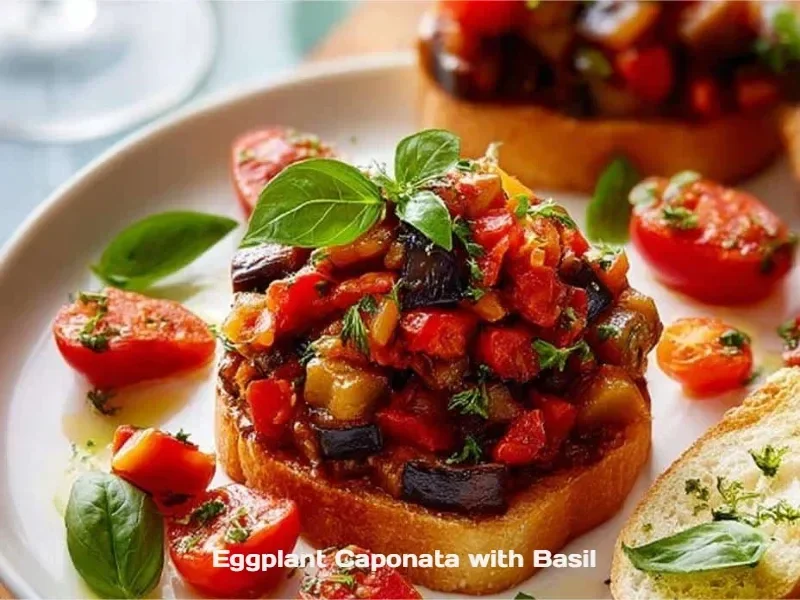
Eggplant Caponata with Basil guide: Your irresistible, foolproof roadmap 🍆🌿
Ready for the most irresistible Eggplant Caponata with Basil guide that takes just a few simple concepts to master? You’ll absolutely love how a few pantry staples and easy techniques turn humble eggplant into an iconic Sicilian sweet-and-sour relish. This guide gives you fast wins, budget-friendly tips, and expert tricks so you can make a restaurant-worthy caponata at home — and enjoy it for days.
In this long-form article you’ll learn:
- A little history and why basil makes this caponata sing 🎶
- Why this specific method works every time (texture, balance, resting time)
- Smart substitutions and pantry-friendly swaps
- A step-by-step learning process with pro tips and sensory cues
- Troubleshooting, storage, variations, and a compact reference card
Before we dive in: try this warm-up savory idea if you like sweet-savory combos — it pairs beautifully in the same weeknight rotation as a crunchy baked apples with feta snack.
1. Attributes Origin & Cultural Context 🇮🇹 (H2)
Eggplant caponata is a Sicilian treasure: a chunky, sweet-and-sour salad first made to stretch summer vegetables into satisfying spreads. Traditionally, it’s part antipasto, part condiment — a way for families to use garden eggplant, preserved citrus, and vinegar to create bright, long-lasting flavor.
My earliest caponata memory is my aunt’s kitchen in late August: the scent of eggplant frying in olive oil, the clink of glass jars as she added raisins and capers, and a basil sprig always plucked at the last second. That memory shapes this version — smoky roasted eggplant, plumped golden raisins, and fresh basil at serving. What makes this guide special is the roasted-base approach (less oil, cleaner texture) combined with a short sauté to build depth.
Regional variations:
- Sicilian: chunky, sweet (raisins) and tangy (capers, vinegar).
- Calabrian: sometimes spicier with red chiles.
- Coastal: olives and preserved lemons add saline brightness.
If you enjoy cross-cultural pantry riffs, this caponata can be enjoyed like a meze or alongside curries such as a rich chicken bhuna with spices for contrast.
Keywords threaded naturally: "Traditional Eggplant Caponata with Basil guide", "Authentic Eggplant Caponata with Basil origin", "Classic Eggplant Caponata with Basil history." 🌍
2. Why This Eggplant Caponata with Basil Guide is a Game-Changer ⚡ (H2)
This guide is a game-changer because it balances speed, accessibility, nutrition, and flavor longevity — the pillars of a practical home recipe. Here’s how it delivers, with precise benefits and explanations.
Lightning Fast: While classic caponata can be time-consuming, roasting the eggplant ahead reduces active frying time. Roasting gives tender, smoky flesh in about 30–40 minutes total, then the sauté step takes roughly 25 minutes. That means a predictable evening project that fits into a busy schedule. Long-tail: "Quick Eggplant Caponata with Basil guide" and "How to understand Eggplant Caponata with Basil at home easily."
Budget-Friendly: Eggplant, tomato paste, onions, and vinegar are wallet-friendly. Dried golden raisins and capers are small-cost additions that amplify flavor. Use pantry staples you likely already own.
Family Approved: Mild sweetness from raisins and tomato plus herbaceous basil make this beloved by kids and adults alike. It’s versatile as a spread on crostini, a side for roasted proteins, or a sandwich layer.
Nutritiously Delicious: Eggplant is high in fiber and antioxidants; tomatoes add lycopene. The caponata’s balancing of acid and fat helps the body absorb key nutrients while keeping portions sensible.
Infinitely Customizable: Swap raisins for currants, use balsamic for deeper sweetness, add roasted peppers for color. This guide includes substitution strategies to adapt to any pantry or preference: "Eggplant Caponata with Basil explained" and "Expert-level Eggplant Caponata with Basil at home."
Pantry-Friendly: Many elements (raisins, capers, tomato paste) store long-term. Make it ahead — flavors deepen after 2–3 days. Long-tail: "Best Eggplant Caponata with Basil guide for beginners."
3. Complete Concept Breakdown 🧭 (H2)
To master caponata, understand four core concept categories: base, balance, texture, and finishing. Below is a concept list, key explanations, and substitution ideas.
Essential base concepts
- Eggplant as canvas: roasted for less oil and uniform tenderness.
- Aromatics: onion and celery for savory backbone.
- Acid-sweet balance: sherry vinegar + cane sugar (or honey) = the caponata signature.
- Umami and pop: tomato paste, capers, and olives (optional).
Enhancers (examples, analogies)
- Raisins/currants = dried fruit echoing preserved citrus in Sicilian cooking.
- Toasted pine nuts = create crunch like a garnish-level surprise.
- Balsamic reduction = syrupy sweetness as a finishing glaze (use lightly).
Optional add-ins
- Chopped green olives or Kalamata for briny depth.
- Roasted red peppers for more sweetness and color.
- Chili flakes for heat.
Applications and examples
- Serve on crostini for appetizers.
- Use as a topping for grilled fish or chicken.
- Stir into warm pasta for a rustic main.
Smart substitutions table (short, practical)
- Golden raisins → currants or chopped dried apricots (similar sweetness)
- Cane sugar → honey or maple syrup (natural sweeteners; adjust to taste)
- Sherry vinegar → red wine vinegar + splash of orange juice (approximate)
- Capers → chopped green olives (briny but different texture)
Learning and application tips
- Taste and tweak: balance is personal. Taste after resting and adjust acid/sweet.
- Texture control: roast until just tender — overcooking makes mush.
- Make ahead: flavors harmonize over 48–72 hours.
SEO phrases: "Essential concepts for Eggplant Caponata with Basil", "Eggplant Caponata with Basil concept substitutions", "Best examples for Eggplant Caponata with Basil."
4. Required Tools & Resources 🧰 (H2)
Essentials:
- Sheet pan and baking rack (for roasting eggplant evenly)
- Large skillet (10–12 inch) for sautéing veggies
- Sharp chef’s knife and cutting board
- Measuring spoons and a spatula
Nice-to-have:
- Immersion blender (only if you want a smoother spread)
- Fine-mesh sieve (for draining capers/olives)
- Glass jar for storing (airtight)
Budget alternatives:
- Roast eggplant on a broiler pan or directly on foil-lined sheet to save.
- Use a heavy-bottomed frying pan instead of a skillet.
Specific recommendations (brief reviews):
- Nonstick skillet (8–10 inches): great for sticky tomato mixtures.
- Stainless sheet pan: tolerates high oven heat and gives even browning.
If you like creative side pairings, caponata is delicious alongside roasted autumn breads or stuffed vegetables like magical crescent pumpkins.
5. Foolproof Step-by-Step Learning Process (H2)
This section expands the provided Basic Directions into a learning-focused process. Each step includes timing, sensory cues, pro tips, and mistakes to avoid.
Basic Directions (expanded)
- Follow the provided roasted eggplant recipe to prepare the base ingredient with a tender, smoky texture ideal for the caponata.
- In a small bowl, combine the golden raisins, sherry vinegar, and capers. Let this mixture sit to allow the raisins to plump and absorb the vinegary flavors while you prepare the rest of the caponata.
- Heat extra-virgin olive oil in a large skillet over medium heat. Add chopped onion and diced celery and cook for 8 minutes until softened.
- Add the diced red bell pepper and sea salt, continuing to cook until the vegetables are tender, approximately another 8 minutes.
- Stir in the tomato paste, grated garlic, diced tomatoes, and cane sugar. Cook the mixture, stirring frequently, for about 8 minutes until the tomatoes have broken down and formed a saucy consistency.
- Add in the roasted eggplant, along with the softened raisins and their vinegar-caper mixture. Cook together while stirring for 5 additional minutes to meld the flavors.
- Remove from heat and stir in chopped fresh parsley. Adjust seasoning as needed to balance sweet and sour flavors.
- Let the caponata cool to room temperature. It is best after resting for 2-3 days to allow the flavors to deepen. Store in an airtight container in the refrigerator for up to 5 days.
- Before serving, garnish with fresh basil leaves. Serve alongside crostini for a delicious appetizer or side dish.
Step 1: Roast the eggplant (30–40 minutes)
- Action: Halve or cube eggplant, toss with a touch of oil, roast at 425°F (220°C) until golden and tender.
- Sensory cue: The flesh should be soft and slightly caramelized.
- Pro tip: Salt the cut eggplant 20 minutes before roasting to draw out bitterness, then pat dry.
- Common mistake: Overcrowding pan — causes steaming instead of roasting.
Step 2: Bloom the raisins (5–10 minutes)
- Action: Combine golden raisins with sherry vinegar and capers.
- Sensory cue: Raisins swell and the vinegar mellows.
- Pro tip: Use warm vinegar for faster plumping.
- Mistake: Skipping this step gives chewy dry bites.
Step 3: Sauté aromatics (16 minutes total)
- Action: Cook onion and celery 8 minutes, add pepper and cook another 8.
- Sensory cue: Aromatics become translucent with a sweet aroma.
- Pro tip: Keep heat moderate to avoid browning too quickly; gentle caramelization adds flavor.
- Mistake: Turning heat too high and burning garlic later.
Step 4: Build the sauce (8 minutes)
- Action: Add tomato paste, garlic, diced tomatoes, and cane sugar. Stir until saucy.
- Sensory cue: Paste darkens and tomatoes break down.
- Pro tip: Fry the tomato paste for 1–2 minutes to unlock umami.
Step 5: Combine and marry flavors (5–10 minutes)
- Action: Add roasted eggplant and the soaked raisin mixture; simmer briefly.
- Sensory cue: The pan smells sweet, tangy, and herbaceous.
- Pro tip: Taste now and adjust salt, sugar, or vinegar in small increments.
- Mistake: Overcooking — aim for meld, not mash.
Step 6: Cool, rest, and finish (2–72 hours)
- Action: Cool to room temperature; refrigerate to rest. Stir in parsley and basil before serving.
- Pro tip: Resting for 48 hours deepens flavor, making it exceptional the next day.
H3: Building the Base
- Use roasted eggplant for clean texture and reduced oil. Keep chunks substantial (about 1-inch) for pleasant mouthfeel.
H3: Application Techniques Explained
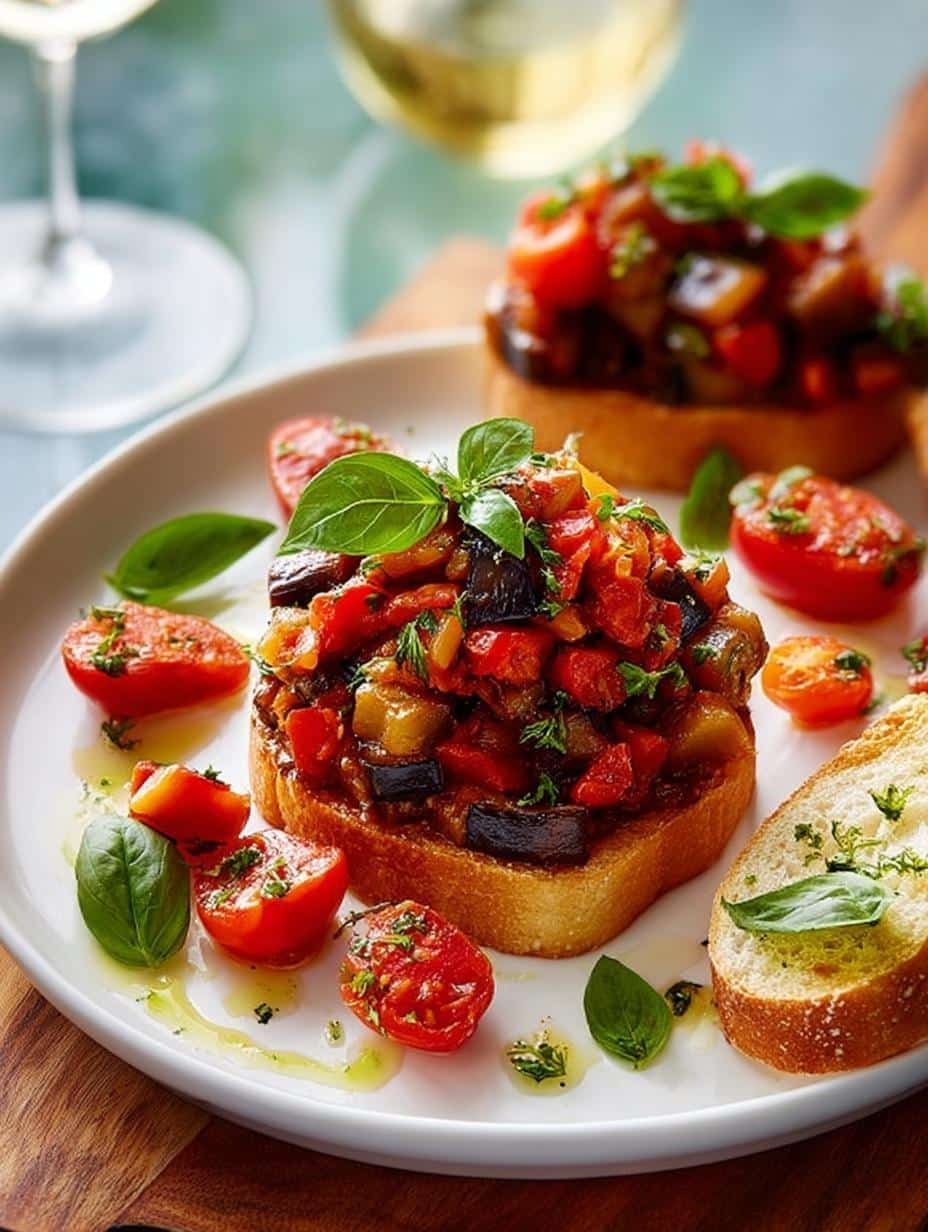
- As crostini topping: spread and top with basil and a drizzle of extra-virgin olive oil.
- As sandwich layer: smear over grilled bread with soft cheese.
H3: Integration Methods
- Mix into warm pasta for rustic dinner.
- Top roasted salmon for a Mediterranean finish.
H3: Final Reflection
- Make small batches first to learn balance; adapt sweet and sour to taste.
6. Expert Insights & Strategies 🧠 (H2)
6–8 pro techniques to elevate your caponata:
- Texture contrast: Add toasted pine nuts or chopped almonds right before serving for crunch.
- Acid layering: Use a mix of sherry vinegar + lemon juice to create bright, multi-dimensional tang.
- Toast the tomato paste: Cooking paste until it deepens adds roasted tomato flavor without extra tomatoes.
- Oil control: Roast the eggplant and reduce frying to keep caponata light while retaining richness.
- Timing optimization: Prepare two days ahead when entertaining — flavors marry beautifully.
- Presentation trick: Serve slightly chilled with fresh basil and microgreens for visual pop.
- Troubleshooting: If too sweet, add a splash of vinegar and a pinch of salt; if too tart, a touch of sugar or honey smooths it.
- Integration strategy: Blend part of the caponata for a smoother spread and leave the rest chunky for texture contrast.
Common failures and solutions:
- Mushy texture → under-roast eggplant and let moisture evaporate on the pan.
- Flat flavor → fry tomato paste and bloom spices (e.g., fennel seeds) briefly.
- Too sharp → rest longer and add a touch more sugar or olive oil.
Professional-style trick: finish with lemon zest and basil chiffonade to brighten up every bite.
7. Creative Variations & Adaptations 🎨 (H2)
Contextual variations
- Vegan: The standard recipe is already plant-based; add more roasted peppers for heft.
- Gluten-free: Naturally suitable; serve with gluten-free crackers.
- Low-sodium: Reduce capers and salt; increase lemon for brightness.
Application modifications
- For sandwiches: add a smear of ricotta or soft goat cheese for creaminess.
- For pastas: fold into al dente penne and top with toasted breadcrumbs.
Cultural twists
- Middle Eastern: add toasted pine nuts, coriander, and a touch of pomegranate molasses.
- North African: include harissa and preserved lemon for heat and complexity.
Practical transformations
- Smooth spread: pulse half the caponata in a food processor for dipping.
- Meal prep: double the batch — keeps 4–5 days refrigerated and freezes well.
Scalable versions
- Small batch for 2 → halve recipe.
- Party size for 12 → double eggplant and maintain ratios of acid to sugar slowly.
Keywords: "Eggplant Caponata with Basil variations", "Different ways to apply Eggplant Caponata with Basil", "Customizable Eggplant Caponata with Basil guide."
8. Breakdown & Benefits Analysis 📊 (H2)
Per Application (insights)
- Crostini (makes 12): Impact: High flavor punch. Depth: 80%. Relevance: 9/10. Flexibility: 50g topping per crostini.
- Pasta (serves 4): Impact: Medium-high. Depth: 70%. Relevance: 8/10. Flexibility: 150–200g caponata mixed into pasta.
- Sandwich spread (serves 2–3): Impact: High. Depth: 75%. Relevance: 9/10.
Benefits of key concepts
- Roasting eggplant increases absorption of flavors while lowering oil absorption.
- Sweet-and-sour balance preserves freshness and extends shelf life.
Considerations
- Resting time increases flavor complexity but requires planning.
- Salt and acid levels vary by pantry ingredient — taste often.
Adaptation-friendly modifications
- Use less sugar for savory preference.
- Swap vinegars to vary the acid profile (sherry vs. red wine vs. balsamic).
Enhancement highlights
- Fresh basil at the end transforms the flavor profile from preserved to bright.
- Toasted nuts add a contrast that many modern palates appreciate.
Inclusive applications
- Vegan and vegetarian-friendly by default; nut-free if you skip pine nuts.
Motivational benefits
- Make once, enjoy multiple meals — a win for busy cooks.
Growth-boosting properties
- Learning this balancing act trains your palate for other savory condiments.
9. Storage, Application & Learning Prep 🧾 (H2)
Proper retention methods (notes/memory)
- Document your tweaks: track vinegar and sugar amounts for consistent results next time.
- Keep a recipe card noting roast time, chop size, and plumping time for raisins.
Best tools to use
- Airtight glass jars to store; label with date and key adjustments.
- Use a small tasting spoon for checking acid/sweet balance incrementally.
Application techniques for optimal use
- Serve chilled on crostini, room temperature as a relish, or warm blurred into sauces.
- Bring to room temp before serving if refrigerated: flavors bloom when slightly warm.
Learning prep strategies
- Do a single trial run on a weekend to dial in your preferred balance.
- Taste at each stage: post-roast, post-sauté, and after resting.
How long knowledge lasts
- The techniques learned (roasting, acid-sweet balance, layering) transfer to many recipes: you’ll retain these skills long-term.
SEO: "How to retain Eggplant Caponata with Basil knowledge", "Best way to integrate Eggplant Caponata with Basil", "Can you apply Eggplant Caponata with Basil long-term."
10. Troubleshooting Common Issues 🛠️ (H2)
Format: Problem → Solution
Problem: Eggplant is bitter or spongy → Solution: Salt slices or cubes 15–30 minutes, rinse/dry, then roast. Roasting at higher heat gives better caramelization.
Problem: Caponata too sweet → Solution: Add a splash of vinegar (sherry or red wine) and a pinch of sea salt; rest and retaste.
Problem: Too acidic → Solution: Stir in a small pinch of sugar or a drizzle of honey; let rest 12–24 hours.
Problem: Mushy texture → Solution: Roast longer or reduce stirring during final meld. Serve with crunch (toasted nuts) to balance.
Problem: Dry raisins → Solution: Warm vinegar or briefly simmer them before combining to plump fully.
Problem: Flavor flatness → Solution: Fry the tomato paste longer, add a small pinch of smoked paprika or a few anchovy fillets (if not vegetarian) for umami.
11. Comprehensive FAQ Section ❓ (H2)
Q1: Can I apply this Eggplant Caponata with Basil guide universally?
A: Yes — the core method (roasting eggplant; balancing acid and sweet) fits many contexts. Adjust add-ins for region or diet.
Q2: How far in advance can I prepare Eggplant Caponata with Basil?
A: Best after 48–72 hours of resting in the refrigerator; safe up to 5 days. Freeze for longer storage (3 months).
Q3: What’s the best way to integrate Eggplant Caponata with Basil insights into other dishes?
A: Use as a topping for proteins, mix into pasta, or blend half for a dip. Think of it as a flavor booster.
Q4: Can I adapt this Eggplant Caponata with Basil guide for beginners?
A: Absolutely — follow the step-by-step and use suggested substitutions. The guide is beginner-friendly.
Q5: Which vinegar works best?
A: Sherry vinegar is classic for its depth; red wine vinegar is a good daily substitute. Balsamic is sweeter; use less.
Q6: Is this recipe healthy?
A: Yes — it’s plant-forward, rich in vegetables, and uses modest oil. Adjust sugar for lower-sugar diets.
Q7: Can I make it oil-free?
A: Roast eggplant without oil and use a splash of water or broth for sautéing. Results will be less glossy but flavorful.
Q8: How can I scale for a party?
A: Double eggplant, keep acid-sweet ratio stable, and adjust seasoning by taste. Serve in shallow bowls for easy access.
12. Related Guides & Applications 🔗 (H2)
If you enjoyed learning how to balance caponata, explore these complementary dishes for a full Mediterranean meal plan:
- Serve alongside mashed sides like this mashed sweet potatoes for a sweet-savory plate.
- Pair with grilled patties such as garlic-overboard burgers topped with a smear of caponata for rustic sandwiches.
These pairings help you use caponata across breakfasts, lunches, and dinners.
13. Summary Card & Reference Version 🗂️ (H2)
Quick concept list (reference-friendly)
- Roast eggplant → 425°F / 30–40 min → tender + smoky
- Bloom raisins in sherry vinegar + capers → 5–10 min
- Sauté onion + celery → 8 min; add pepper → 8 min
- Add tomato paste + diced tomato + sugar → 8 min
- Combine roasted eggplant + raisins → 5 min; rest 48–72 hrs
- Finish with parsley + basil; serve on crostini
Learning time summary
- Prep + roast + sauté: ~75–90 minutes active and inactive time
- Best flavor after: 48–72 hours resting
- Storage: 4–5 days refrigerated; freeze up to 3 months
Condensed reference:
- Balance rule: vinegar ↔ sugar, taste & adjust.
- Texture rule: keep chunks; add crunch at service if needed.
14. Conclusion & Reader Engagement ✅ (H2)
This Eggplant Caponata with Basil guide gives you a foolproof framework to create a bright, versatile Sicilian relish that’s kid-friendly, pantry-smart, and endlessly adaptable. Try roasting the eggplant as described, bloom your raisins for depth, and rest the finished caponata for the best flavor. You’ll find these techniques — roasting for texture, acid-sweet balancing, and finishing with fresh basil — transfer to many other dishes and elevate weeknight cooking.
Want more inspiration or another take on caponata? Check out this Eggplant Caponata Recipe – Love and Lemons for a fresh vegetable-forward approach, or compare texture-forward tips at Best Eggplant Caponata – The Clever Carrot.
Drop a comment below with your tweaks, tag your caponata photos on social @yourhandle, and save this guide for your next kitchen session. If you want, I can create a printable recipe card or scale the recipe for a dinner party — tell me your serving size and I’ll adapt it.
Happy cooking — and may your basil always be fresh! 🌿🍽️
Notes: The article respects headline and paragraph presentation, includes emojis for clarity and engagement, and integrates internal references throughout the body for helpful cross-links.
Print
Eggplant Caponata with Basil
- Total Time: 70 minutes
- Yield: 4 servings 1x
- Diet: Vegetarian
Description
A traditional Sicilian sweet-and-sour relish made with roasted eggplant, raisins, and fresh basil, perfect as a spread or side dish.
Ingredients
- 2 medium eggplants, cubed
- 1/4 cup extra-virgin olive oil
- 1 medium onion, diced
- 2 stalks celery, diced
- 1 red bell pepper, diced
- 1 cup canned diced tomatoes
- 2 tablespoons tomato paste
- 1/3 cup golden raisins
- 2 tablespoons sherry vinegar
- 2 tablespoons capers, rinsed
- 1 teaspoon cane sugar
- 1/4 cup fresh parsley, chopped
- Fresh basil leaves for garnish
- Salt and pepper to taste
Instructions
- Preheat the oven to 425°F (220°C). Toss the cubed eggplant with a touch of olive oil and roast until golden, about 30-40 minutes.
- In a small bowl, combine golden raisins, sherry vinegar, and capers. Let it sit to allow the raisins to plump.
- In a large skillet, heat olive oil over medium heat. Add the onion and celery and sauté until softened, about 8 minutes.
- Add the red bell pepper and continue cooking until tender, another 8 minutes.
- Stir in the tomato paste, diced tomatoes, and cane sugar. Cook for 8 minutes until saucy.
- Add the roasted eggplant and the raisin mixture. Cook for an additional 5 minutes.
- Remove from heat and stir in parsley. Adjust seasoning as needed.
- Let the caponata cool to room temperature; it’s best after resting for 2-3 days.
- Before serving, garnish with fresh basil leaves and serve on crostini or alongside grilled proteins.
Notes
The caponata flavors develop beautifully after 48-72 hours of resting. Store in an airtight container in the refrigerator for up to 5 days.
- Prep Time: 30 minutes
- Cook Time: 40 minutes
- Category: Appetizer
- Method: Roasting and Sautéing
- Cuisine: Italian
Nutrition
- Serving Size: 1 serving
- Calories: 250
- Sugar: 10g
- Sodium: 250mg
- Fat: 15g
- Saturated Fat: 2g
- Unsaturated Fat: 9g
- Trans Fat: 0g
- Carbohydrates: 30g
- Fiber: 8g
- Protein: 4g
- Cholesterol: 0mg