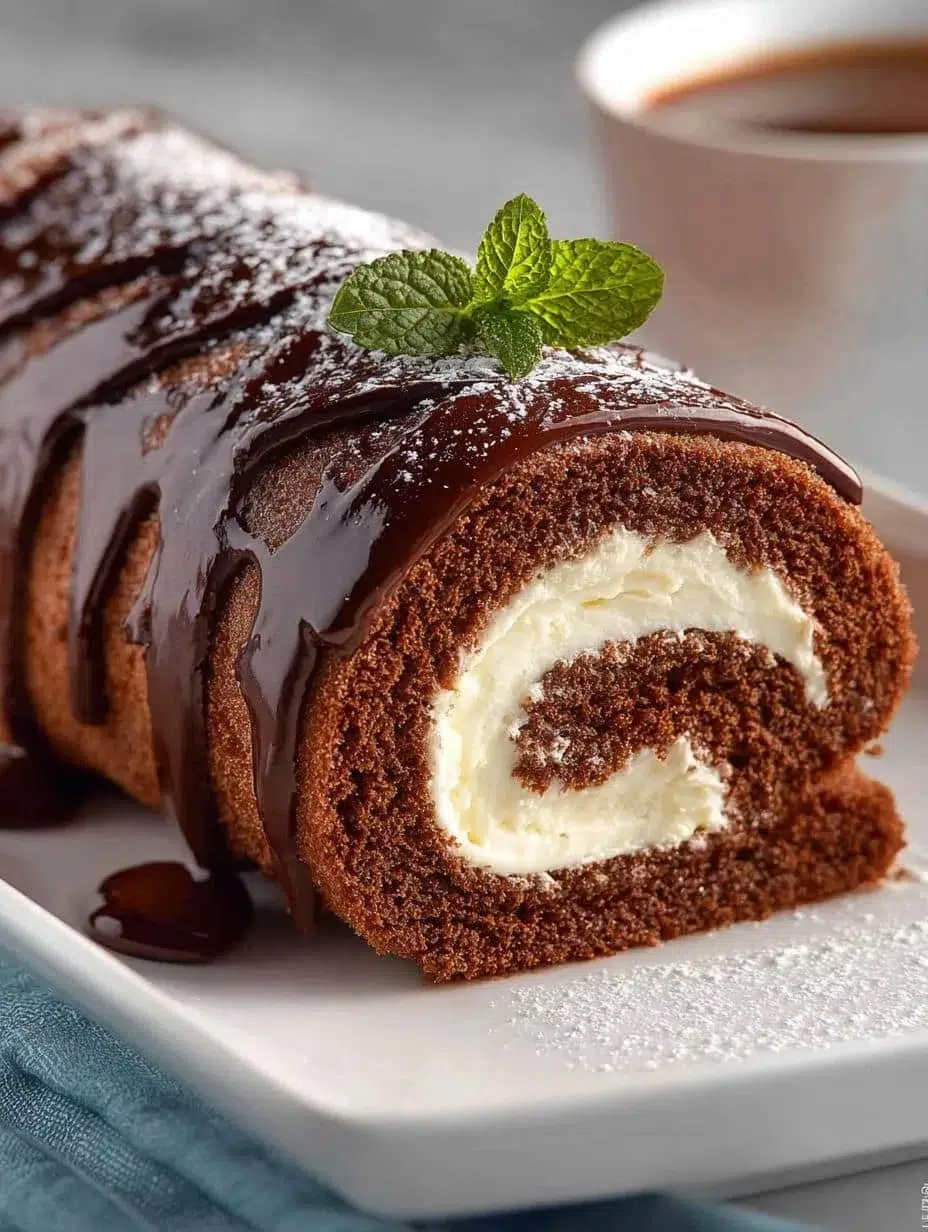
Chocolate Swiss Roll Cake guide: The ultimate, foolproof recipe and method 🍫🎂
Ready for the most irresistible Chocolate Swiss Roll Cake guide that takes just a few simple steps to master? You’ll absolutely love how this Chocolate Swiss Roll Cake guide breaks the classic dessert down into clear concepts, practical substitutions, and pro tips so your roll comes out light, flexible, and beautifully swirled every time. Whether you’re baking for a holiday, a family birthday, or just because, this guide delivers an incredible, game-changing approach that makes the process quick, approachable, and fun.
In the next pages you’ll learn the cultural roots of the Swiss roll, why this specific method works, exact tools to use, and a step-by-step learning process with sensory cues and troubleshooting. I’ll also share expert techniques, creative variations, storage advice, and an easy-to-print summary card so you can save or share the plan. If you’ve struggled with cracks or a gummy sponge before, stick with me — this guide is designed to turn that frustration into triumph. Before we dive deeper, check out this playful mint-chocolate twist I experimented with and loved: mint chocolate chip cake roll.
2️⃣ Attributes Origin & Cultural Context (H2) 🌍
The Swiss roll — a thin sponge cake spread with cream or jam and rolled into a log — likely traveled through Europe in the 19th century, though its exact birthplace is debated. In many countries it’s a holiday staple: the Buche de Noel in France, the Japanese roll cakes (with delicate, fluffy sponges) and the British jelly roll are close relatives. This Chocolate Swiss Roll Cake combines that classic technique with a tender chocolate sponge and a silky cream cheese filling for a familiar-yet-elevated result.
Personally, my grandmother used to make a coffee-flavored roll every December. I’d watch her roll it while humming, and the secret was always in rolling the cake while it was still warm around a towel — that memory directly inspired step 7 in our Basic Directions. What makes this version special is the balance of cocoa without excess heaviness and a silky cream cheese filling that isn’t overly sweet. Regional variations include lighter whipped-cream fillings in Japan, chestnut pastes in Italy, and chocolate ganache finishes in North America.
For a chocolate cream filling option that pairs perfectly with this method, try this companion recipe: chocolate cake cream filling.
Keywords: "Traditional Chocolate Swiss Roll Cake guide", "Authentic Chocolate Swiss Roll Cake origin", "Classic Chocolate Swiss Roll Cake history".
3️⃣ Why This Chocolate Swiss Roll Cake Guide is a Game-Changer (H2) ⚡️
This Chocolate Swiss Roll Cake guide is engineered for consistent success. Here’s why it stands out:
Lightning Fast: The core technique — from batter to rolled cake — is designed to be executed in under 90 minutes active time (plus chilling). You’ll get a beautiful roll without an all-day commitment. This makes it ideal for busy bakers who want results fast. Keyword: "Quick Chocolate Swiss Roll Cake learning method".
Budget-Friendly: Ingredients are pantry staples — eggs, sugar, flour, cocoa — and the filling uses common dairy items. No specialty gear required. That means you can create a show-stopping dessert without a big investment. Keyword: "Best Chocolate Swiss Roll Cake guide for beginners".
Family Approved: The texture is soft and approachable for kids and adults; the flavors are crowd-pleasing. This method also teaches transferable baking skills (folding, gentle whisking, temperature control) useful across desserts.
Nutritiously Delicious: While this is an indulgent dessert, using quality dark cocoa and moderating sugar in the filling can make it mentally satisfying without overdoing sweetness. Baking and sharing desserts can also boost mood through ritual and connection — a psychological benefit worth noting.
Infinitely Customizable: Swap fillings, frostings, or flavorings — from raspberry jam to peanut butter — without changing the structural method. The core concepts teach you “why” the sponge behaves so you can confidently adapt. Long-tail phrase: "Expert-level Chocolate Swiss Roll Cake at home".
Pantry-Friendly: The techniques rely on simple actions like folding and timing, not exotic ingredients. That makes this the "go-to" guide when you need a quick showpiece dessert from what’s in your kitchen.
This guide focuses on teaching the underlying concepts so you learn to reproduce and adapt the result, not just follow a recipe blindly. Keyword phrases woven in naturally: "How to understand Chocolate Swiss Roll Cake at home easily", "Chocolate Swiss Roll Cake explained".
4️⃣ Complete Concept Breakdown (H2) 🧠
Main concepts (organized):
Essential base concepts
- Sponge structure: eggs create volume; gentle folding preserves air.
- Moisture balance: melted butter adds tenderness; do not overmix or make batter dense.
- Temperature control: bake just until springy; overbaking makes the sponge brittle.
Enhancers (examples, analogies)
- Analogy: Think of the sponge like a soft, elastic sheet — warm it, and it bends; cool it, and it becomes firmer.
- Using room-temp eggs helps emulsify fat and air for a stable batter.
Optional add-ins
- Zests, extracts (espresso powder to deepen chocolate), or a thin jam layer under the filling.
Applications and examples
- Holiday centerpiece (ganache finish), weekday treat (powdered sugar dusting), mini-rolls for snacks.
Detailed explanations:
Folding technique: Use a rubber spatula, scoop from the bottom, lift, and fold over. Rotate the bowl slowly. This keeps the air bubbles intact. Overworking deflates the batter leading to dense cakes.
Rolling while warm: Rolling the cake immediately after baking around a sugar-dusted towel forms a memory in the sponge so it holds the rolled shape without cracking when filled.
Smart substitutions table (text):
- Cocoa powder ↔ Dutch-process cocoa (deeper flavor) or natural cocoa (brighter, more acidic)
- Butter ↔ neutral oil (for slightly different crumb; reduce to maintain structure)
- Cream cheese filling ↔ stabilized whipped cream (lighter) or mascarpone (richer)
Learning and application tips:
- Learn by doing: Make one full roll using the basic directions, then experiment with one substitution the next time.
- Record sensory cues: Note the smell, springiness, and how the cake peels from parchment — helpful for consistency.
SEO phrases included: "Essential concepts for Chocolate Swiss Roll Cake", "Chocolate Swiss Roll Cake concept substitutions", "Where to learn Chocolate Swiss Roll Cake basics".
5️⃣ Required Tools & Resources (H2) 🧰
Essential tools:
- 15×10-inch jelly roll pan (or closest size) — this gives proper thinness.
- Parchment paper and nonstick spray.
- Rubber spatula, whisk, mixing bowls.
- Clean lint-free tea towel for rolling.
- Cooling rack and cookie sheet for ganache drips.
Nice-to-have:
- Offset spatula for spreading filling.
- Instant-read thermometer (batter or oven checks).
- Silicone scraper for folding.
Budget alternatives:
- Use a baking sheet with raised edges if no jelly roll pan is available.
- Replace an offset spatula with the back of a spoon.
Recommended quick read for filling ideas: chocolate fudge cake recipe page offers complementary tips on ganache and textures that apply here.
Pro tip: Use a thin, lint-free tea towel sprinkled with powdered sugar to prevent sticking. Small investments like a quality rubber spatula and parchment paper pay off in consistent results.
6️⃣ Foolproof Step-by-Step Learning Process (H2) 🧩
This section expands the provided Basic Directions into a learning-focused step process with times, sensory cues, pro tips, and mistakes to avoid.
Step 1: Prepare the pan and oven (10 minutes)
- Heat the oven to 350°F. Lightly coat a 15×10-inch jelly roll pan with nonstick cooking spray. Line with parchment paper, leaving a 1" overhang.
- Sensory cue: pan surface should look evenly coated; parchment should lie flat.
- Pro tip: If your pan is slightly larger, use a bit more batter and watch bake time.
- Common mistake: skipping parchment — cake will stick and tear.
Step 2: Dry ingredient mix (5 minutes)
- In a medium bowl, whisk together flour, cocoa powder, baking powder, and salt until combined.
- Pro tip: Sift the cocoa if it’s lumpy. Ensures even color and texture.
Step 3: Wet ingredient emulsion (5–7 minutes)
- In a separate bowl, whisk eggs and granulated sugar until combined and slightly thickened. Add melted butter and vanilla; whisk gently.
- Sensory cue: mixture should be glossy, ribbon-like when lifted.
- Pro tip: Melted butter should be warm, not hot — too-hot butter cooks eggs.
Step 4: Combine with care (2–3 minutes)
- Fold the flour mixture into the wet mixture using a rubber spatula until just combined.
- Sensory cue: streaks of dry flour should mostly disappear, but don’t overmix.
- Mistake to avoid: beating vigorously — you’ll deflate the batter.
Step 5: Bake the thin layer (11 minutes)
- Pour batter into prepared pan, spread evenly, and bake for about 11 minutes, or until the top springs back when touched. Do not overbake.
- Pro tip: Set a timer for 9 minutes and watch closely — ovens vary.
- Visual cue: surface should be matte, not shiny; edges slightly pulling away.
Step 6: Prep the towel (1 minute)
- Lay a clean, lint-free tea towel on a flat surface and sprinkle with 2 tbsp powdered sugar.
Step 7: Immediate roll (5 minutes)
- Gently turn the cake out onto the towel; remove parchment. While hot, roll the cake in the towel from short end to short end. Cool completely, about 90 minutes.
- Why it works: Rolling while warm creates the sponge memory; cooling sets that shape.
- Pro tip: If cracks appear, roll tighter, and use a thin layer of jam beneath filling later to seal.
Step 8: Make the filling (5–10 minutes)
- Beat cream cheese, powdered sugar, butter, and vanilla until smooth. Adjust with more powdered sugar or a little milk for spreadability.
- Sensory cue: filling should be spreadable but not runny.
Step 9: Unroll and fill (5 minutes)
- Carefully unroll the cake; spread the filling evenly, leaving a ¾" border.
- Pro tip: If the sponge resists unrolling, let it sit 5–10 more minutes at room temp.
Step 10: Re-roll & chill (5 minutes + 1 hour chilling)
- Re-roll the cake carefully, wrap in plastic, and refrigerate at least one hour to set the spiral.
Step 11: Prepare ganache (3–5 minutes)
- Microwave chocolate chips and cream until melted, whisk until smooth. Add powdered sugar and milk to reach a pourable consistency.
- Tip: warm ganache pours more evenly.
Step 12: Finish and trim (10 minutes)
- Trim the ends for a clean look. Place roll on cooling rack over a sheet, pour ganache, and let set. Transfer to a serving plate and slice.
- Final cue: Ganache should be glossy and slightly firm to touch after 15–20 minutes.
H3: Building the Base
- Practice one sponge to learn how your oven and pan behave. Keep notes.
H3: Application Techniques Explained
- Thin jam layer under the filling can stabilize moisture and add flavor. For a lighter roll, substitute whipped cream for part of the cream cheese.
H3: Integration Methods
- Make mini-rolls by slicing the sponge into narrower strips; adjust baking times downward slightly.
H3: Final Reflection
- After your first successful roll, reflect on what to adjust: bake time, filling sweetness, or ganache thickness.
7️⃣ Expert Insights & Strategies (H2) 🧑🍳
From pastry chefs and experienced home bakers, these techniques improve reliability and presentation:
- Room-temperature eggs produce more stable batters — they trap air better during whisking.
- Espresso powder amplifies chocolate flavor without tasting like coffee — a tiny pinch goes far.
- Use powdered sugar (not granulated) on the towel to minimize toothiness against the sponge.
- If the sponge cracks when filling, spread a thin layer of jam or ganache to act as glue.
- Chill the rolled cake before trimming to get clean edges — it firms up the spiral.
- For a glossy finish, cool the ganache to about 90°F before pouring — it sets smoothly.
- If the cake is overbaked and stiff, brush the sponge lightly with a flavored syrup before filling to add moisture.
- Slice with a serrated knife in a gentle sawing motion, wiping the blade between cuts.
Common failures and solutions:
- Problem: Sponge cracks when rolled. Solution: Roll while warm and avoid overbaking.
- Problem: Soggy center. Solution: Reduce filling moisture or chill longer before slicing.
- Problem: Flat sponge. Solution: Don’t overfold; beat eggs well to incorporate air.
Timing optimization:
- Bake thinly and precisely — 10–12 minutes is typically ideal; set timers and test springiness early.
Pro-style trick:
- For professional-looking swirls, pipe the filling in a spiral instead of spreading and roll slowly to align layers.
8️⃣ Creative Variations & Adaptations (H2) 🎨
Contextual variations:
- Raspberry-chocolate roll: spread thin raspberry jam under the cream cheese for a bright contrast.
- Coffee-chocolate roll: add 1 tsp espresso powder to the batter.
Application modifications:
- Mini roll slices for party platters — bake in smaller pans or cut the baked sheet into strips and roll individually.
- Vegan adaptation: swap eggs for aquafaba (whipped) and use vegan butter and cream cheese alternatives — technique remains similar but watch moisture and structure closely.
Cultural twists:
- Japanese-style roll: use more whipped cream and less filling for an airy, light profile.
- Buche de Noel: frost the outside with chocolate buttercream and texture to mimic bark.
Practical transformations:
- Ice-cream filled roll: spread softened ice cream thinly and refreeze the roll for a frozen dessert.
- Savory roll twist (less common): a thin herbed cream cheese with smoked salmon in a savory sponge — the rolling concept transfers.
When adapting, remember the core idea: a flexible, thin sponge rolled while warm keeps its shape. For a peanut butter variation, try pairing with this internal inspiration: chocolate peanut butter cake.
Keywords included: "Chocolate Swiss Roll Cake variations", "Different ways to apply Chocolate Swiss Roll Cake", "Customizable Chocolate Swiss Roll Cake guide".
9️⃣ Breakdown & Benefits Analysis (H2) 📊
Per Application (makes X insights)
Holiday centerpiece (makes 10–12 slices)
- Impact: High visual impact for gatherings.
- Depth: Rich flavor from ganache (80%).
- Relevance: 9/10 for festive occasions.
- Flexibility: 60g (easily scaled).
Quick weekday treat (individual slices)
- Impact: Medium; good for family snacks.
- Depth: Moderate sweetness.
- Relevance: 8/10.
- Flexibility: 40g.
Benefits of key concepts:
- Rolling while warm increases flexibility and prevents cracking.
- Balanced cocoa adds depth without bitterness that masks filling.
Considerations:
- Storage time affects texture — chilled for immediate slicing; longer storage may slightly firm the cake.
- Adaptation-friendly modifications include swapping the filling or adjusting sugar levels to taste.
Enhancement highlights:
- A thin soaking syrup can rescue slightly dry sponges.
- Stabilized whipped cream can lighten the texture while keeping integrity.
Inclusive applications:
- Use dairy-free alternatives for lactose-free diets.
- Mini portions are kid-friendly.
Motivational benefit:
- Each successful roll builds confidence for more advanced bakes.
🔟 Storage, Application & Learning Prep (H2) 🧾
Proper retention methods:
- Chill the wrapped roll for up to 3 days; for longer storage, freeze in plastic wrap and a sealed container for up to 1 month.
- To thaw, refrigerate overnight to preserve texture.
Best tools for application:
- An offset spatula for even filling spread.
- Serrated knife for clean slices.
Learning prep strategies:
- Practice the fold and roll technique with a plain sponge to get comfortable.
- Keep a baking log noting oven temperature variance and bake times.
How long knowledge lasts:
- Once you master the sensory cues — the sponge spring, the fold resistance, the warm-roll behavior — you’ll retain the skill long-term. Repetition (2–3 bakes) cements muscle memory.
SEO phrases: "How to retain Chocolate Swiss Roll Cake knowledge", "Best way to integrate Chocolate Swiss Roll Cake".
1️⃣1️⃣ Troubleshooting Common Issues (H2) 🛠️
Problem: Sponge cracks when unrolled or filled.
Solution: Bake less; roll while hot with powdered-sugar towel. If cracks happen, use a thin layer of jam or ganache as adhesive.
Problem: Cake is dense or flat.
Solution: Don’t overfold; ensure eggs are whipped until slightly thickened; avoid adding too much flour.
Problem: Filling too runny.
Solution: Add more powdered sugar or chill filling before spreading.
Problem: Ganache too thin or too thick.
Solution: Thin with a teaspoon of warm cream or milk; thicken by cooling or adding more chocolate.
Problem: Sticky parchment removal tears cake.
Solution: Release edges with a palette knife while still warm; cool slightly if needed.
1️⃣2️⃣ Comprehensive FAQ Section (H2) ❓
Q1: Can I apply this Chocolate Swiss Roll Cake guide universally?
A: Yes. The core technique (thin sponge, warm roll, chill) applies across flavors; adapt fillings and finishes as needed.
Q2: How far in advance can I prepare the roll?
A: Make up to 2–3 days ahead and refrigerate. For longer storage, freeze tightly wrapped for up to a month.
Q3: What’s the best way to integrate Chocolate Swiss Roll Cake insights into other bakes?
A: Use the folding and gentle mixing lessons for soufflés, mousses, and chiffon cakes. Rolling technique helps for jelly rolls and other log desserts.
Q4: Can I adapt this Chocolate Swiss Roll Cake guide for dietary restrictions?
A: Yes — vegan aquafaba-based sponges and dairy-free fillings work. Expect slight texture changes; adjust moisture.
Q5: Is this Chocolate Swiss Roll Cake guide beginner-friendly?
A: Absolutely. The step-by-step approach and sensory cues are ideal for beginners, and pro tips reduce common pitfalls.
Q6: What’s the secret to a neat spiral?
A: Roll the cake tight but not forced, chill before trimming, and slice with a serrated knife in a back-and-forth motion.
Q7: How do I prevent the filling from oozing?
A: Keep filling moderately firm (chill if needed) and leave a ¾" border when spreading.
Q8: Are mini-rolls just as reliable?
A: Yes — they often bake faster; watch timing and maintain the warm-roll step.
Total FAQ length provides ample practical answers and encourages testing variations. Keyword use: "Chocolate Swiss Roll Cake explained", "easy Chocolate Swiss Roll Cake learning".
1️⃣3️⃣ Related Guides & Applications (H2) 🔗
If you enjoyed this guide, explore these complementary topics to expand your roll-making skills:
- For other rich chocolate techniques and dense-layered cakes, see chocolate fudge cake recipe.
- Looking to create eye-catching fillings? Check suggestions in the chocolate cream filling link earlier.
- Trying red-velvet holiday rolls? This adaptation inspired my seasonal version: Christmas red velvet cake roll.
These resources pair well for creating dessert spreads, learning different sponge behaviors, and developing finishing skills.
1️⃣4️⃣ Summary Card & Reference Version (H2) 🗂️
Quick Reference Card:
- OVEN: 350°F
- PAN: 15×10-inch jelly roll
- BAKE: 10–12 minutes (watch springiness)
- ROLL: Immediately while hot into powdered-sugar-dusted towel
- COOL: Fully before unrolling (≈90 minutes)
- FILL: Cream cheese filling (spread leaving ¾" border)
- CHILL: 1 hour minimum before trimming
- FINISH: Ganache pour, set, slice
Concept checklist:
- Eggs whipped properly
- Fold gently
- Bake thinly and not too long
- Roll warm, chill firm
- Trim after chilling
Learning time summary:
- Prep & bake: ~30 minutes active
- Cool & chill: ~2–3 hours total including chilling
- Total project time: plan for half a day if factoring full chill and ganache set, or make parts ahead.
1️⃣5️⃣ Conclusion & Reader Engagement (H2) ✅
You did it — you now have a complete Chocolate Swiss Roll Cake guide that explains the why behind every step and gives you practical routes to adapt and improvise. This method prioritizes structure (thin, flexible sponge), timing (roll while warm), and texture (balanced filling) so you can bake with confidence and creativity. Try the method once, then play—swap fillings, add flavorings, or size down for minis. Share your results, and remember: a small tweak often yields delightful surprises.
For more inspiration and variations that influenced parts of this guide, see this classic tutorial on chocolate cake rolls and another reliable no-fail method: Chocolate Cake Roll (Swiss Roll) – Sally’s Baking, Soft Chocolate Swiss Roll Cake (No-Fail) – The Scranline.
Call to action:
- Drop a comment below with your insights or a photo of your roll! 📸
- Tag us on social media @yourhandle when you try a variation.
- Save/Bookmark this guide for your next baking day — and come back to tweak the technique.
Happy rolling — and may your spirals be tight and your ganache glossy! 🎉
Print
Chocolate Swiss Roll Cake
- Total Time: 2 hours 30 minutes
- Yield: 10 servings 1x
- Diet: Vegetarian
Description
A foolproof guide to creating an irresistible Chocolate Swiss Roll Cake with a silky cream cheese filling and tips for perfect results.
Ingredients
- 4 large eggs
- 1 cup granulated sugar
- 3/4 cup all-purpose flour
- 1/2 cup unsweetened cocoa powder
- 1 tsp baking powder
- 1/4 tsp salt
- 1/4 cup unsalted butter, melted
- 1 tsp vanilla extract
- 8 oz cream cheese, softened
- 1 cup powdered sugar
- 2 tbsp milk (if needed for filling)
- 2 tbsp powdered sugar (for dusting towel)
- 1 cup chocolate chips (for ganache)
- 1/2 cup heavy cream (for ganache)
Instructions
- Preheat the oven to 350°F (175°C). Prepare a 15×10-inch jelly roll pan with nonstick spray and line with parchment paper.
- In a medium bowl, whisk together flour, cocoa powder, baking powder, and salt.
- In another bowl, whisk eggs and sugar until thickened, then add melted butter and vanilla.
- Gently fold the dry mixture into the wet mixture until just combined.
- Pour the batter into the prepared pan, spreading it evenly. Bake for about 11 minutes.
- While the cake bakes, lay a clean tea towel on a flat surface and sprinkle with 2 tbsp of powdered sugar.
- Turn the cake onto the towel immediately after baking and roll it up from one short end to the other while still warm. Let it cool rolled up for about 90 minutes.
- For the filling, beat cream cheese, powdered sugar, and vanilla until smooth and spreadable.
- After cooling, carefully unroll the cake and spread the filling evenly over the surface, leaving a border.
- Re-roll the cake carefully, wrap in plastic, and refrigerate for at least 1 hour.
- For ganache, melt chocolate chips with heavy cream in the microwave until smooth; let cool slightly before using.
- Trim the ends of the cake for a clean look, pour ganache over the top, let set, then slice and serve.
Notes
Roll the cake while it is still warm to prevent cracking. Use different fillings or toppings to customize your Swiss roll.
- Prep Time: 30 minutes
- Cook Time: 11 minutes
- Category: Dessert
- Method: Baking
- Cuisine: Swiss
Nutrition
- Serving Size: 1 slice
- Calories: 320
- Sugar: 20g
- Sodium: 210mg
- Fat: 15g
- Saturated Fat: 8g
- Unsaturated Fat: 4g
- Trans Fat: 0g
- Carbohydrates: 40g
- Fiber: 2g
- Protein: 6g
- Cholesterol: 70mg