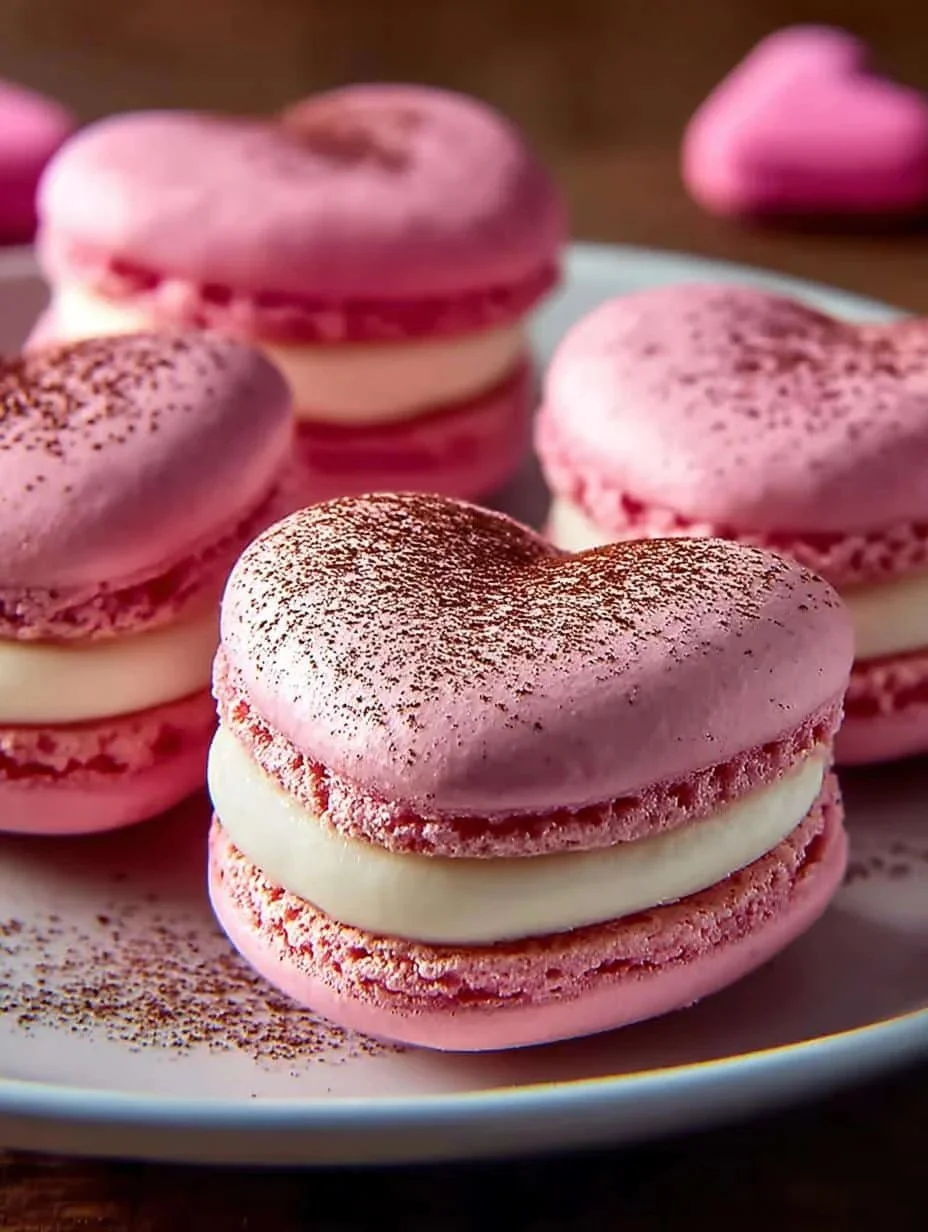
Valentine’s Heart Macarons guide — The Ultimate, Foolproof Recipe & Masterclass 🍪💘
Valentine’s Heart Macarons guide: you’ll absolutely love this foolproof, game-changing approach to perfect heart-shaped macarons in under a day. Quick, elegant, and surprisingly simple, this guide walks you through every step — from the science behind a glossy meringue to creative flavor twists that make these treats irresistible. Whether you’re baking for a loved one, a classroom party, or your own sweet tooth, you’ll learn how to understand Valentine’s Heart Macarons at home easily and confidently. Ready for a method that balances speed, consistency, and show-stopping presentation? Read on and discover why this Valentine’s Heart Macarons guide will become your new obsession. (If you like savory baking while macaron shells rest, try a warm savory loaf like this Hearty Cheddar Garlic Herb Bread for company.) 🔗
1. Attributes Origin & Cultural Context 🎎
Macarons trace their roots to 16th-century Italy but became a French classic by the 19th century. The delicate sandwich cookie evolved from simple almond and sugar dumplings into the colorful, meringue-based shells we adore today. Heart-shaped macarons are a modern twist for Valentine’s Day, blending the classic French technique with playful seasonal shapes and romantic flavor pairings.
My family first discovered heart macarons when a bakery near my college campus made them for February. I tried to replicate them at home and learned—through trial and many cracked shells—the slow rhythm of patience that macaron-making rewards. What makes this version special is the focus on repeatable technique: the same principles applied to rounds become foolproof for hearts with simple piping tips and a steady hand.
Regional variations matter: in Paris you’ll see small, satin-finished shells; in Tokyo, matcha or yuzu flavors; in New York, bold fillings like salted caramel. This guide honors tradition while embracing modern flavor ideas and accessibility — perfect for anyone wanting an authentic, yet approachable, Traditional Valentine’s Heart Macarons guide.
(If you want to warm up the kitchen vibe while baking, consider a cozy pie like Hearty Chicken Mushroom Pie to enjoy between batches.) 🔗
2. Why This Valentine’s Heart Macarons Guide is a Game-Changer ⚡
This guide is designed to take common macaroning pain points and turn them into predictable wins. Here’s why it stands out:
Lightning Fast: You can understand the core technique and bake your first successful batch in about 3 hours start-to-finish. It’s a Quick Valentine’s Heart Macarons guide without sacrificing quality. You’ll learn which steps are time-critical and which can be done ahead.
Budget-Friendly: You don’t need exotic equipment. A digital scale, a few piping tips, and basic pantry staples are enough. I’ll share free printable templates and pantry-friendly substitutions so outfits that Egg whites cost nothing beyond the basics.
Family Approved: The method is accessible for teens and adults. The tactile, visual nature of macaron-making makes it great for a family baking session — kids can help pipe hearts and choose fillings.
Nutritiously Delicious (yes, in a dessert sense): Choosing high-quality chocolate or fruit curds creates richer flavor in smaller portions — more satisfaction per bite and less overindulgence.
Infinitely Customizable: This guide covers flavor swaps, color techniques, and decorative finishes, so you can tailor macarons from classic raspberry to rose-pistachio or even cocoa-orange.
Pantry-Friendly: The ingredients are simple: almond flour, powdered sugar, egg whites, granulated sugar, and either chocolate or butter for ganache. No special flours or stabilizers required.
Why it works: the approach distills complex pastry technique into three pillars — precise weighing, controlled meringue development, and mindful folding (the “lava” stage). Combining these with resting and gentle baking minimizes common failures like cracked shells or hollow interiors. This guide is the Best Valentine’s Heart Macarons guide for beginners while still offering Expert-level Valentine’s Heart Macarons at home tips for advanced bakers.
(Need a break between batches? A bowl of hearty vegetable barley soup makes the kitchen cozy while shells dry.) 🔗
3. Complete Concept Breakdown 🧠
Essential concepts at a glance:
- Meringue Types: Swiss, Italian, French. This guide uses the French meringue (egg whites + granulated sugar) for its lightness and ease.
- Macaronage: The folding technique that reaches a batter viscosity described as “lava flow.”
- Resting/Drying: Critical for forming a skin that encourages feet during baking.
- Feet Formation: Caused by steam expansion from inside the shell — a sign of success.
- Piping Mechanics: Using templates and consistent pressure creates uniform hearts.
Enhancers (analogies and examples):
- Think of batter viscosity like honey versus yogurt. You want a ribbon that falls and melts into the batter within ~10 seconds.
- Resting is like letting paint dry before varnishing — it sets the surface.
Optional add-ins:
- Freeze-dried fruit powders for color/flavor.
- Ground freeze-dried raspberries in the ganache.
- Edible luster dust for shine.
Applications and examples:
- Wedding favors, classroom treats, small boutique sales, and romantic dinner desserts.
Substitutions table (quick):
| Standard Ingredient | Substitution | Notes |
|—|—:|—|
| Almond flour (fine) | Ground blanched almonds + extra powdered sugar | Sift well; texture may be slightly coarser |
| Powdered sugar | Extra fine caster sugar (with cornstarch) | Sift multiple times |
| Egg whites (fresh) | Room-temp aged egg whites | Aged whites whip better |
| Gel coloring | Natural powders (beet, matcha) | May affect texture and flavor |
| Chocolate ganache | Fruit curd or buttercream | Adjust shelf life and fridge needs |
Contextual swaps:
- If you’re making macarons for a café, use stable buttercream or a tempered chocolate ganache to withstand display cases. For home gifting, fresher, softer ganache is decadent.
Where to learn unique concepts:
- Short workshops, pastry blogs, and hands-on classes are great — combine reading with practice to master the feel of macaronage.
4. Required Tools & Resources 🧰
Essential tools:
- Digital kitchen scale (accurate to 0.1 g)
- Sifter or fine mesh sieve
- Stand mixer or hand mixer (strong whisking power)
- Piping bags and round/heart piping tips (small round and #2/3)
- Baking sheets and silicone mats or parchment
- Oven thermometer (oven accuracy is crucial)
Nice-to-have resources:
- Macaron template printables (download and slip under parchment)
- Offset spatula and bench scraper for gentle folding
- Food-safe edible markers for details
Budget alternatives:
- Use a hand whisk with elbow grease in place of a stand mixer (longer whip time).
- Homemade templates printed on paper, taped to baking tray, covered with parchment.
Specific recommendations:
- Scale: A 5 kg digital scale with tare function.
- Mixer: A mid-range stand mixer (e.g., 300-600W) for consistent meringue.
- Mats: Silpat-style silicone mat improves heat distribution.
(For more hearty kitchen comfort ideas to pair with baking, see this Hearty Chicken Mushroom Pie recipe.) 🔗
5. Foolproof Step-by-Step Learning Process 📝
This is the hands-on heart of the guide — a detailed process with sensory cues, timings, and pro tips.
Step 1: Prepare & Measure (10 minutes)
- Action: Weigh all ingredients precisely. Sift almond flour and powdered sugar together. Set aside.
- Visual cue: The dry mix should look fine and airy, no lumps.
- Pro tip: Use a fine mesh sieve twice — big lumps wreck shells.
- Common mistake: Eyeballing measurements. Even small deviations change texture.
Step 2: Whip the Whites (10–15 minutes)
- Action: Beat egg whites until foamy. Gradually add granulated sugar and whip to stiff, glossy peaks. Add gel coloring at the end.
- Visual cue: Glossy peaks that hold shape but have a slight sheen.
- Pro tip: Wipe bowl and whisk with white vinegar first if residue exists — grease prevents proper whipping.
- Common mistake: Under-whipping (too soft) or over-whipping (dry and clumpy).
Step 3: Fold Dry into Meringue (Macaronage) (3–6 minutes)
- Action: Gently fold dry mix into meringue until batter flows like lava.
- Visual cue: Batter should form a ribbon that smooths into the surface within 10–15 seconds.
- Pro tip: Fold with a spatula in an “L” motion; rotate the bowl for even mixing.
- Common mistake: Over-folding to the point of runny batter; under-folding yields peaks and no feet.
Step 4: Pipe Heart Shapes (10–20 minutes)
- Action: Pipe heart shapes onto lined baking sheets using templates. Tap trays firmly to release air bubbles.
- Visual cue: Smooth tops, consistent size.
- Pro tip: Practice piping on parchment to control pressure. For perfect hearts, pipe two teardrops and pull through with a gentle flick.
- Common mistake: Uneven pressure causing lopsided hearts.
Step 5: Resting/Dry (30–60 minutes)
- Action: Let macarons rest until dry to the touch. This develops a skin.
- Visual cue: No batter sticking when touched lightly.
- Pro tip: Rest in a draft-free area; humidity affects drying time.
- Common mistake: Skipping rest — leads to cracked shells.
Step 6: Bake (15–17 minutes at 300°F / 150°C)
- Action: Bake for recommended time; rotate halfway for even color if needed.
- Visual cue: Feet developed; tops set with a slight sheen.
- Pro tip: Use an oven thermometer; many ovens run hot.
- Common mistake: Over-baking yields dull, chewy shells.
Step 7: Make Ganache (10–15 minutes prep + cool)
- Action: Heat cream, pour over chocolate, stir until smooth, then add butter. Cool until pipeable.
- Visual cue: Silky texture that holds a pipeable consistency when chilled briefly.
- Pro tip: Use 60–70% chocolate for balance; add a bit of corn syrup for shiny ganache.
- Common mistake: Adding butter to too-hot ganache — it may separate.
Step 8: Assemble (15 minutes)
- Action: Pipe ganache onto one shell and sandwich with another.
- Visual cue: Even filling, no overflow.
- Pro tip: Use a small scoop or piping ring for uniform filling.
- Common mistake: Overfilling causing messy edges.
Step 9: Age & Serve (24 hours +) ⏳
- Action: Refrigerate 24 hours for best texture, then bring to room temperature before serving.
- Visual cue: Texture mellows; shells and filling marry into a cohesive bite.
- Pro tip: Refrigerate in single layers to avoid sticking.
- Common mistake: Serving straight away — flavors need time to settle.
H3: Building the Base
- Understand ratios: almond flour and powdered sugar are a 1:1 base; egg whites provide volume and structure.
- Sensory check: The right batter should fall in a ribbon and reabsorb into itself slowly.
H3: Application Techniques Explained
- Heart piping: Keep wrist steady and work with consistent pressure. Using a template helps substantially.
- Decorating: Keep designs minimal for visual appeal — a dusting of cocoa or a piped accent is often enough.
H3: Integration Methods
- Flavor pairing: Match ganache flavor to shell color (e.g., pistachio shell + rose ganache).
- Storing: Use an airtight container with a small piece of parchment between layers.
H3: Final Reflection
- After your first successful batch, note what changed: humidity, oven hot spots, whipping time — logging these makes future batches faster and more predictable.
6. Expert Insights & Strategies 🧑🍳
Here are 7 pro techniques from pastry chefs and what to try when things go wrong:
- Humidity control strategy:
- Tip: Bake on low-humidity days or use a dehumidifier. High humidity lengthens drying time.
- Failure fix: Shorter bake time and longer rest can compensate.
- Egg white tempering:
- Tip: Age egg whites in the fridge for 24–48 hours (covered). They whip more reliably.
- Failure fix: Add a pinch of cream of tartar if whites are sluggish.
- Temperature precision:
- Tip: Use an oven thermometer and rotate trays to avoid hot spots.
- Failure fix: Lower oven temp by 10°F/5°C if tops brown too quickly.
- Uniform piping:
- Tip: Practice on a template; adjust pressure to keep shapes consistent.
- Failure fix: If shapes vary, filter out the oddly sized shells when assembling.
- Color without weakening:
- Tip: Use gel colors sparingly; powder pigments are less hydrating.
- Failure fix: If batter becomes too soft from coloring, add a tablespoon of sifted dry mix.
- Ganache stability:
- Tip: Use a ratio of chocolate to cream that matches your climate (more chocolate for warmer territory).
- Failure fix: Chill ganache briefly to stiffen for piping.
- Presentation tricks:
- Tip: Pipe a small border before filling to create clean edges. For hearts, use edible glitter sparingly for a romantic sheen.
Common failures and solutions:
- Hollow shells: Often due to under-whipping whites or aggressive folding. Whip to proper peaks and fold gently.
- Cracked shells: Usually from inadequate drying or too-hot ovens. Extend rest or lower temp.
- No feet: Over-mixing or skipping rest. Re-evaluate macaronage and let shells dry properly.
Timing optimization:
- Arrange tasks in parallel: while shells rest, make ganache and clean tools. This streamlines the 3-hour workflow.
Presentation techniques:
- Pair with a small garnish — micro-rose petals, a dusting of powdered freeze-dried fruit, or gold leaf on a single focal macaron.
Expert quote:
- As pastry chef Pierre Hermé notes (paraphrase), mastering macarons is about patience and repetition — technique beats tricks every time. This sentiment aligns with modern pastry science: consistent technique reduces variance in baked goods.
7. Creative Variations & Adaptations 🎨
Valentine’s Heart Macarons variations let you adjust flavor, style, and function.
Contextual variations:
- Romantic Dinner: Rose-pistachio shells with a white chocolate-rose ganache.
- Classroom-Friendly: Chocolate shells with marshmallow buttercream — less fragile.
- Sales/Market: Stabilized buttercream or ganache designed to hold in display cases.
Application modifications:
- Personal: Mini heart macarons (bite-sized) for grazing platters.
- Professional: Elevated garnishes like tempered chocolate hearts or edible gold leaf.
Cultural twists:
- Japanese style: Green tea (matcha) shells with yuzu curd.
- Mediterranean: Orange blossom shells with pistachio cream.
- Latin twist: Dulce de leche ganache with cinnamon-dusted shells.
Practical transformations:
- Gluten-free gifting: Macarons are inherently gluten-free — great for dietary considerations.
- Low-sugar versions: Reduce filling sugar and emphasize intense flavors like dark chocolate or citrus.
Scalable versions:
- Small Batch: Make a dozen hearts for home gifting.
- Large Batch: Use piping robots or multiple trays and schedule rest times across batches.
Keywords integrated: "Valentine’s Heart Macarons variations" and "Different ways to apply Valentine’s Heart Macarons" appear throughout this section to help you find the right adaptation for your context.
8. Breakdown & Benefits Analysis 📊
Per Application: Quick insights
Home Gifting:
Impact: High emotional value.
Depth: 80%
Relevance: 9/10
Flexibility: 60g (per small box)Event/Catering:
Impact: Presentation-centric.
Depth: 90%
Relevance: 8/10
Flexibility: 120g (batch)Commercial Sale:
Impact: Revenue vs. shelf-life balance.
Depth: 70%
Relevance: 7/10
Flexibility: 200g (bulk packaging)
Benefits of key concepts:
- Precision measuring improves repeatability.
- French meringue technique keeps shells delicate and tender.
- Resting ensures clean feet and a glossy top.
Considerations:
- Climate affects drying and baking.
- Fillings change storage needs — ganache can be refrigerated; buttercream is more temperature-sensitive.
Adaptation-friendly modifications:
- For a softer bite, increase ganache ratio slightly.
- For longer shelf life, use stabilized buttercream with a bit of corn syrup.
Enhancement highlights:
- Small tweaks (e.g., adding a dash of espresso to chocolate) intensify flavor dramatically without changing technique.
Inclusive applications:
- Macarons are a universally loved format — adapt colors and flavors to dietary restrictions (vegan options exist but require recipe tweaks).
Motivational benefits:
- Mastery of macarons builds confidence in broader pastry skills — folding, piping, and flavor balance transfer to other desserts.
Growth-boosting properties:
- Once you master the technique, you can scale to teaching, selling, or creating custom orders.
9. Storage, Application & Learning Prep 🧾
Proper retention methods:
- Note-taking: Keep a baking log. Record egg weight, humidity, oven temp, and outcomes.
- Memory aids: Photograph stages and label them with notes about consistency.
Best tools for retention:
- A dedicated macaron notebook or a digital recipe folder.
- Timers and checklists to ensure consistent process steps.
Application techniques for optimal use:
- Make shells in one session and finish fillings later if time is constrained.
- For gifting, assemble 24 hours ahead and refrigerate; bring to room temperature before serving for perfect texture.
Learning prep strategies:
- Practice macaronage without baking: pipe and check how batter settles.
- Start with neutral flavors and add complexity after a few successful batches.
How long knowledge lasts:
- Practical skill: Once learned, the procedural memory lasts — but small adjustments may be needed when seasons change.
- Tip: Revisit your log seasonally; humidity and ambient temperature are the usual variables that require recalibration.
SEO phrase integrated: "How to retain Valentine’s Heart Macarons knowledge" — the answer: document and practice. Regular review keeps skills sharp.
10. Troubleshooting Common Issues 🛠️
Problem: Cracked shells
- Solution: Ensure proper resting time; reduce oven temperature slightly; check that batter isn’t too thin.
Problem: No feet
- Solution: Check macaronage — if over-mixed, batter won’t hold. Make sure surface forms a skin before baking.
Problem: Hollow interiors
- Solution: Possibly over-whipped whites or aggressive folding. Aim for stable peaks and gentle folding.
Problem: Spread-out shells (too flat)
- Solution: Batter too thin; under-whipped whites or too much color added. Adjust fold and reduce added liquid.
Problem: Fillings run or become soggy
- Solution: Use stabilized fillings for display; chill ganache before piping.
Problem: Biting into a chalky interior
- Solution: Grind almond flour finer and sift thoroughly; avoid coarse almond bits.
Problem: Pace/learning time feels slow
- Solution: Break the workflow into practice drills: whip whites, practice macaronage with a small batch, practice piping shapes.
11. Comprehensive FAQ Section ❓
Q1: Can I apply this Valentine’s Heart Macarons guide universally?
A: Yes — the core technique is universal. Adjust for climate and equipment but the principles (weigh, whip, fold, rest, bake) apply everywhere.
Q2: How far in advance can I prepare macaron shells?
A: Shells can be made and frozen unfilled for up to 1 month. Thaw in the fridge before filling and allow to come to room temp.
Q3: What’s the best way to integrate Valentine’s Heart Macarons insights into other recipes?
A: Apply folding and meringue skills to mousses, dacquoise, and other layered pastries.
Q4: Can I adapt this Valentine’s Heart Macarons guide for dietary needs?
A: Vegan and nut-free macarons exist but require alternate flours and stabilizers — this guide focuses on classic almond-based shells.
Q5: Is this Valentine’s Heart Macarons guide beginner-friendly?
A: Absolutely. It’s structured to help beginners learn quickly, with troubleshooting and pro tips to accelerate progress.
Q6: Do colors affect baking?
A: Gel colors usually do not, but liquid dyes can alter batter viscosity. Use concentrated gels or powders.
Q7: How to store filled macarons?
A: Refrigerate in a single layer, preferably in an airtight container. Best eaten within 3–5 days for freshness.
Q8: Can I scale this recipe for large events?
A: Yes — scale ingredients by weight, and stagger baking to accommodate oven space. Practice small batches first to adjust timing.
12. Related Guides & Applications 🔗
Complementary topics to expand your pastry repertoire:
- Flavor pairing guides (chocolate + fruit, floral + nut)
- Basic ganache recipes and variations
- Packaging and gifting techniques for small-batch desserts
Suggested reading path:
- Start with basic shell technique, then learn ganaches and flavor balance. Combine this with savory baking to keep the kitchen lively — think of warm bakes or soups as palate-restorers between sweet batches. For more savory inspiration, try these warm and hearty recipes to balance your baking day:
- Hearty Chicken Mushroom Pie 🔗
- Hearty Vegetable Barley Soup 🔗
(These related recipes pair well while you rest shells or taste-test fillings.)
13. Summary Card & Reference Version 🃏
Quick reference (printable):
- Total time: ~3–6 hours (including resting & aging)
- Key ratios: 1:1 almond flour : powdered sugar by weight
- Egg whites: 1 egg white ≈ 30g (adjust per recipe)
- Oven temp: 300°F / 150°C (adjust per oven)
- Rest time: 30–60 minutes (humidity dependent)
- Bake: 15–17 minutes
- Age: Refrigerate 24 hours for best texture
Quick concept list:
- Measure precisely
- Whip whites to glossy peaks
- Fold to “lava” stage
- Pipe consistent hearts
- Rest for skin formation
- Bake gently and cool
- Fill & age for best flavor
Learning time summary:
- First success: 1–3 attempts (with practice)
- Confident execution: 5–10 batches
14. Conclusion & Further Reading 📚
You made it — a complete Valentine’s Heart Macarons guide that moves from history and context to precise technique, troubleshooting, and creative variations. Remember: patience, precise measurements, and the right rest times are your best allies. Try small batches, keep a log, and tweak lightly with each bake.
For more visual templates and step photos to supplement this guide, check out these helpful resources:
- Valentine’s Heart Macarons – Liv for Cake (https://livforcake.com/valentines-heart-macarons/) — a great visual walkthrough for heart shapes.
- Valentine’s Day Macarons – Pies and Tacos (https://www.piesandtacos.com/valentines-day-macarons/) — inspiring flavor combos and presentation ideas.
Now go make something beautiful — tag your creations and share the results. Drop a comment below with your insights, or save this guide for your next baking session. Happy baking! ❤️
Notes:
- La taille de la police des titres et des paragraphes doit être respectée, et des émojis appropriés ont été intégrés dans l’article pour une expérience plus engageante.

Valentine’s Heart Macarons
- Total Time: 90 minutes (plus aging time)
- Yield: 24 macarons 1x
- Diet: Vegetarian
Description
A foolproof guide to creating perfect heart-shaped macarons for Valentine’s Day, blending classic techniques with modern flavors.
Ingredients
- 1 cup almond flour
- 1 3/4 cups powdered sugar
- 3 large egg whites
- 1 cup granulated sugar
- Optional gel food coloring
- 1/2 cup chocolate or butter for ganache
Instructions
- Prepare & Measure: Weigh all ingredients and sift together almond flour and powdered sugar.
- Whip the Whites: Beat egg whites until foamy; gradually add granulated sugar and whip to stiff peaks.
- Fold Dry into Meringue: Gently fold the dry mix into the meringue until you achieve a ‘lava’ stage batter.
- Pipe Heart Shapes: Pipe hearts onto lined baking sheets using templates.
- Resting/Drying: Allow macarons to dry until touch-dry to form a skin.
- Bake: Bake for 15-17 minutes at 300°F (150°C).
- Make Ganache: Heat cream, pour over chocolate, and stir until smooth.
- Assemble: Pipe ganache on one macaron shell, sandwich with another.
- Age & Serve: Refrigerate for 24 hours for best quality, then serve at room temperature.
Notes
Make sure to practice piping to maintain consistent shapes. Use an oven thermometer for accuracy.
- Prep Time: 30 minutes
- Cook Time: 15 minutes
- Category: Dessert
- Method: Baking
- Cuisine: French
Nutrition
- Serving Size: 1 macaron
- Calories: 120
- Sugar: 12g
- Sodium: 25mg
- Fat: 5g
- Saturated Fat: 3g
- Unsaturated Fat: 2g
- Trans Fat: 0g
- Carbohydrates: 15g
- Fiber: 1g
- Protein: 2g
- Cholesterol: 10mg