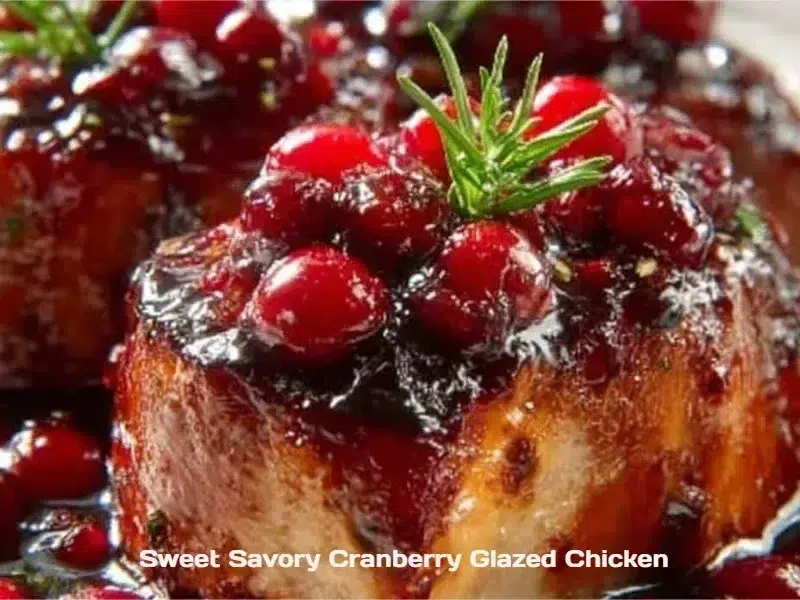
Sweet Savory Cranberry Glazed Chicken guide: The Ultimate 2000+ Word Guide 🍽️
Ready for the most irresistible Sweet Savory Cranberry Glazed Chicken guide that takes just a weeknight’s worth of effort to master? You’ll absolutely love how this recipe balances bright tart cranberries with honeyed sweetness and savory soy notes — a game-changing dish that’s quick, family-friendly, and elegant enough for guests. In this guide you’ll learn why the glaze works, smart substitutions if you’re missing ingredients, pro timing and plating tips, plus variations that take the recipe from cozy weeknight to festive centerpiece.
Whether you’re a beginner looking for an easy Sweet Savory Cranberry Glazed Chicken learning path or a home cook chasing an expert-level finish, this guide lays out everything step by step. Along the way I’ll share personal anecdotes, kitchen science insights, and links to helpful companion recipes like an apple cider glazed chicken for more glaze inspiration. Let’s get started — you’ll be serving this within an hour and getting rave reviews. 🍷🍗
1. Attributes Origin & Cultural Context 🌍
Cranberries have long been associated with harvest tables, holidays and the bright, tart notes that cut through richer flavors. Combining cranberries with savory ingredients — soy, broth, garlic — is a modern Americana interpretation that borrows from both classic northern U.S. cranberry traditions and savory glaze techniques used in East Asian cooking.
My first memory of a cranberry glaze came from my grandmother’s holiday table: she spooned tart compote over roasted poultry to give it a festive lift. Years later, while developing weeknight-friendly protein recipes, I paired those compote instincts with quick pan-glaze techniques learned from stir-fry cooking — and this Sweet Savory Cranberry Glazed Chicken was born.
What makes this version special is the balance: fresh or frozen cranberries provide brightness, honey or maple gives rounded sweetness, and a splash of soy sauce introduces umami to keep the dish grounded. Regional variations exist — add orange zest in New England-style preparations, or swap soy for tamari and ginger for an Asian twist. For more cranberry-protein ideas, see this cranberry-glazed turkey meatloaf inspiration: https://recipeartistry.com/cranberry-glazed-turkey-meatloaf-recipe/.
2. Why This Sweet Savory Cranberry Glazed Chicken Guide is a Game-Changer ✨
This guide is designed to get you from pantry to plate with confidence. Here’s why it will change how you approach glazed chicken:
- ⚡ Lightning Fast: Understand the core technique in 10–15 minutes and execute the whole dish in about 30–40 minutes. The approach focuses on high-impact steps: quick sear, fast glaze reduction, and brief finishing time so chicken stays juicy.
- 💰 Budget-Friendly: Uses pantry staples (broth, honey, soy) and affordable chicken breasts — no specialty ingredients required. Swap honey with syrup or brown sugar to save even more.
- 👨👩👧 Family Approved: Kids and adults both love the sweet-tart profile. Portioning and mild spice level make it accessible.
- 🥗 Nutritiously Delicious: Lean protein plus the antioxidants from cranberries give this dish both flavor and nutrient density. Cranberries are linked to urinary tract health and have polyphenols that provide antioxidant benefits.
- 🔄 Infinitely Customizable: Make it more savory by adding bacon or mushrooms, or more festive with orange zest and toasted pecans.
- 📦 Pantry-Friendly: Uses ingredient categories most home cooks already have: fresh/frozen fruit, sweetener, broth, soy sauce, and aromatics.
This guide teaches not just a recipe, but the “why”: why acid brightens, why sugars help glaze and color, and why timing matters to avoid overcooking chicken. Think of it as the best Sweet Savory Cranberry Glazed Chicken guide for beginners who want to become confident in glaze techniques. Long-tail searches like how to understand Sweet Savory Cranberry Glazed Chicken at home easily or Expert-level Sweet Savory Cranberry Glazed Chicken at home are addressed through the step-by-step and troubleshooting sections below.
3. Complete Concept Breakdown — What’s Happening & Why 🧠
Understanding the basic concepts makes it easy to adapt the recipe:
Essential base concepts
- Protein doneness: Chicken breasts should reach 160–165°F internal temp. Overcooking causes dryness.
- Glaze mechanics: Sugar (honey) + heat reduces and thickens; pectin from cranberries helps set the sauce.
- Flavor balance: Sweet + sour + salt + umami. If one is missing, the glaze feels flat.
Enhancers (how they work)
- Acid (vinegar, citrus) brightens and cuts sweetness.
- Umami (soy sauce, miso) deepens savory notes.
- Fat (butter, olive oil) smooths and carries flavor on the palate.
Optional add-ins
- Orange zest or juice — classic Cranberry-Orange twist.
- Fresh herbs (parsley, thyme) — added at the end for freshness.
- Nuts (pecans) — for crunch and festive texture.
Applications and examples
- Weeknight dinner over rice or mashed potatoes.
- Holiday plate with roasted vegetables.
- Sandwiches using leftover glazed chicken for an easy lunch.
Smart substitutions table (quick reference)
- Honey → maple syrup or brown sugar
- Chicken broth → vegetable broth or water + bouillon
- Soy sauce → tamari or coconut aminos (GF)
- Fresh cranberries → frozen cranberries (same function)
Learning and application tips
- Taste as you reduce the glaze; sugar intensifies when concentrated.
- Adjust salt and acid at the end for best balance.
- Use a thermometer for consistent chicken doneness.
If you want a slow-cooked alternative using similar flavor profiles, check out global crockpot ideas such as this sweet garlic chicken crockpot. That resource shows how the same flavor logic scales for low-and-slow methods.
4. Required Tools & Resources 🛠️
Essentials:
- Large skillet (nonstick or stainless) with lid — for searing and finishing
- Tongs and a sharp chef’s knife
- Instant-read thermometer — invaluable for perfectly cooked chicken
- Measuring spoons/cups and wooden spoon
Nice-to-have:
- Zester for orange or lemon
- Small blender or immersion blender (if you prefer fully smooth glaze)
- Splatter screen to keep the stovetop tidy
Budget alternatives:
- Use a heavy-bottomed sauté pan if you don’t have a skillet.
- Skip the thermometer and check doneness by slicing — look for opaque, firm flesh and clear juices (but thermometer is recommended).
- Replace fancy honey with store-brand honey or brown sugar.
For a festive, textured finish with brie and cranberries, consider pairing the plate with a side like sweet potato rounds with brie, cranberry & pecans — it complements the glaze beautifully.
5. Foolproof Step-by-Step Learning Process (Detailed) 🔪
This section walks you through the entire process with timing, sensory cues, pro tips and common mistakes.
Step 1: Prep the ingredients (10 minutes)
- Action: Rinse and pat dry 4 boneless skinless chicken breasts. Measure cranberries (fresh or frozen — 2 cups), 1/2 cup chicken broth, 1/4 cup honey, 2 tbsp soy sauce, olive oil, salt, pepper, garlic powder and onion powder.
- Sensory cues: Chicken should be dry to the touch so it browns properly.
- Pro tip: Flatten thicker parts with a mallet or press for even cooking.
- Common mistake: Skipping pat-dry — leads to steaming instead of searing.
Step 2: Season and sear the chicken (10–12 minutes)
- Action: Season both sides with salt, pepper, garlic powder, onion powder. Heat 2 tbsp olive oil over medium-high. Add chicken and cook 5–7 minutes per side until golden brown. Remove and set aside.
- Sensory cues: A nice golden crust and a sizzle when chicken hits the pan.
- Pro tip: Don’t overcrowd the pan; work in batches if needed.
- Common mistake: Moving chicken too early — prevents crust from forming.
Step 3: Build the cranberry glaze (8–12 minutes)
- Action: In the same skillet, reduce heat to medium. Add 2 cups cranberries, 1/2 cup chicken broth, 1/4 cup honey, and 2 tbsp soy sauce. Stir and bring to a simmer.
- Sensory cues: Cranberries will pop and the mixture will thicken into a jam-like glaze in 5–10 minutes.
- Pro tip: Use a spoon to press some cranberries against the pan to help release pectin and thicken the glaze faster.
- Common mistake: Turning heat too high — glaze can scorch or over-reduce.
Step 4: Finish and coat (2–4 minutes)
- Action: Return chicken to the skillet and spoon glaze over each breast. Cook another 2–3 minutes to heat through and let flavors marry. Remove from heat.
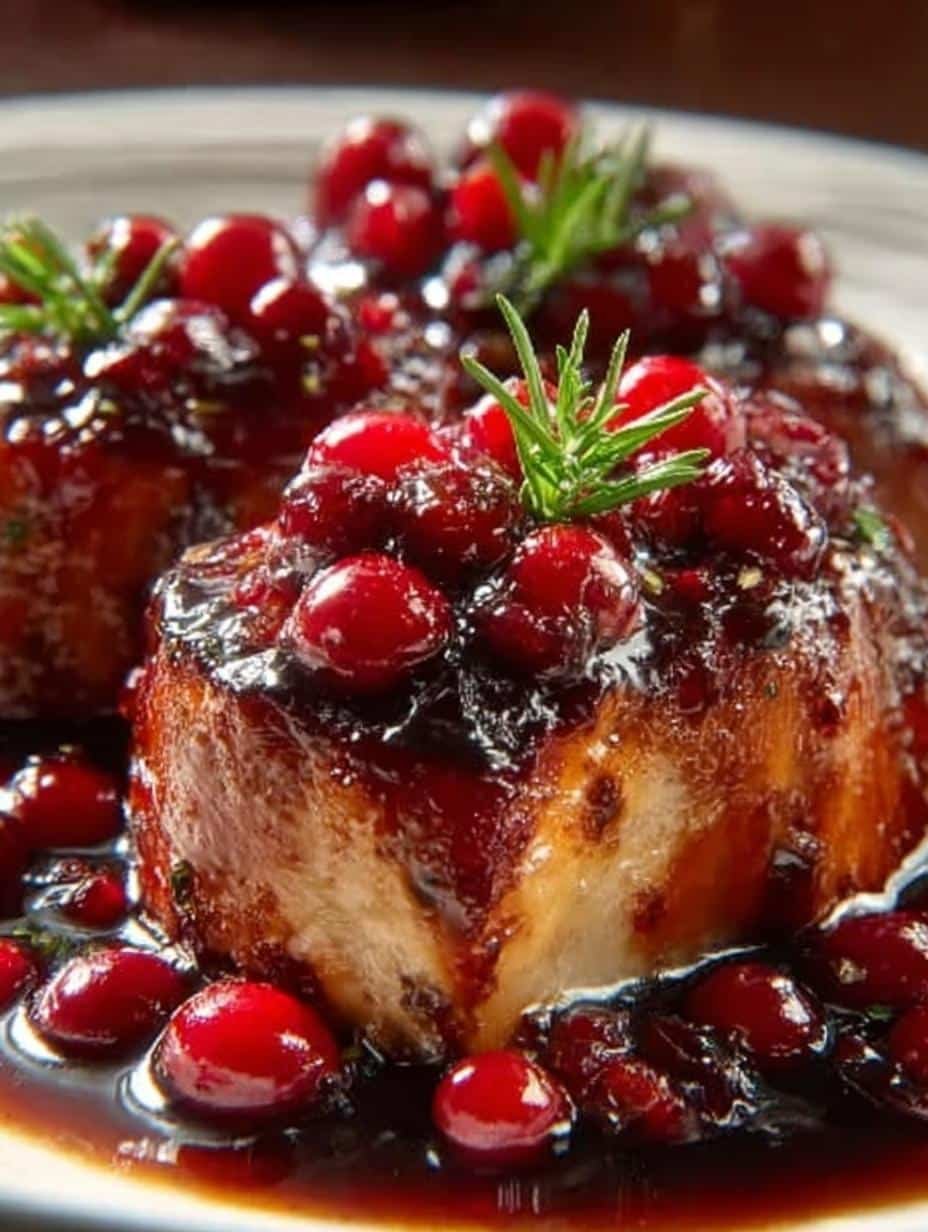
- Sensory cues: Glaze should cling to the chicken and appear glossy.
- Pro tip: Off heat, stir in a pat of butter (1 tbsp) for sheen and mouthfeel.
- Common mistake: Leaving chicken in glaze too long; it will overcook.
Step 5: Garnish and serve (2–3 minutes)
- Action: Garnish with chopped fresh parsley and optional orange zest. Transfer to serving platter and drizzle remaining glaze on top.
- Sensory cues: Bright herb aroma and glossy finish.
- Pro tip: Serve with simple sides that soak up glaze — mashed potatoes or rice.
- Common mistake: Skipping the rest period; allow chicken to rest 3–5 minutes to lock in juices.
H3 — Building the Base
Build a simple base by mastering the sear and the quick reduction. Once you nail the timing, the rest is layering flavors.
H3 — Application Techniques Explained
Use the glaze to finish other proteins — pork chops, roasted tofu, or turkey meatloaf for holiday twists.
H3 — Integration Methods
This technique integrates into meal prep: roast a few breasts and refrigerate with glaze — rewarm gently to maintain texture.
H3 — Final Reflection
Practice makes timing intuitive. After 2–3 tries you’ll instinctively know when the glaze is perfect.
6. Expert Insights & Strategies 🧑🍳
Here are pro-level tricks culled from culinary practice and food science:
- Control moisture before searing — dryness equals browning. Food scientist Harold McGee emphasizes surface moisture as the enemy of a good sear.
- Use residual fond — the browned bits in the pan contain concentrated flavor; deglaze with broth to incorporate them into the glaze.
- Layer acid at the end — a squeeze of lemon or orange brightens without overpowering.
- Mind sugar concentration — taste as the glaze reduces; concentration increases perceived sweetness and saltiness.
- Optimize timing — sear first, then reduce glaze while chicken rests; finishing brings everything together.
- Texture play — add toasted nuts at the end for contrast.
- Heat control — medium to medium-high prevents burning sugars.
- Presentation matters — spoon glaze to create glossy streaks for a restaurant finish.
Common failures and solutions:
- Burnt glaze: Lower the heat, add a splash more broth.
- Flat flavor: Add an acid (vinegar or citrus) and a pinch more salt.
- Dry chicken: Shorten sear time slightly and ensure proper rest.
Timing optimization tip: Use 5–7 minutes per side on medium-high for average-thickness breasts; adjust down for thin pieces. An instant-read thermometer reading 160°F in the thickest part indicates done — carry-over heat will bring it near 165°F.
7. Creative Variations & Adaptations 🎨
Here are ways to make this dish yours:
Contextual variations
- Cranberry-Orange: Add 1 tbsp orange zest and 2 tbsp fresh orange juice for citrus brightness.
- Spicy-Sweet: Add 1 tsp chili paste or red pepper flakes to the glaze.
- Asian Fusion: Add grated ginger and a splash of rice vinegar; swap honey for mirin.
Application modifications
- For sandwiches: Shred leftover glazed chicken, toss with extra glaze and serve on toasted brioche.
- For salads: Slice and serve warm over mixed greens with a light vinaigrette.
Cultural twists
- New England twist: Add apple cider reduction and serve with roasted root vegetables.
- Mediterranean-style: Use pomegranate molasses instead of honey and fresh mint.
Practical transformations
- Make it vegetarian: Roast firm tofu, sear until golden, and use the same glaze.
- Meal prep: Cook multiple breasts; store in airtight containers with glaze separated and combine when reheating.
For a dessert-adjacent twist inspired by sweet cranberry pairings, consider recipes like these cranberry praline ideas: https://recipeartistry.com/bake-cranberry-pecan-praline/. Small inspiration links like that help expand your culinary toolkit.
Keywords to remember when experimenting: Sweet Savory Cranberry Glazed Chicken variations, Different ways to apply Sweet Savory Cranberry Glazed Chicken, Customizable Sweet Savory Cranberry Glazed Chicken guide.
8. Breakdown & Benefits Analysis 📊
Per Application (makes 4 servings / yields 4 insights)
- Impact: High — This dish delivers brightness, umami depth, and visual appeal (8/10)
- Depth: 75% — Combines simple technique with concentrated flavor
- Relevance: 9/10 — Works for weeknights and holidays
- Flexibility: 85g — Adaptable to protein swaps and sides
Benefits of core concepts:
- Quick preparation timeframe (<45 minutes) boosts weeknight usability.
- Pantry-based ingredients minimize shopping friction.
- High sensory payoff: glossy glaze, bright tartness, savory depth.
Considerations:
- Sweetness level depends on honey and reduction; adjust per taste and dietary needs.
- Sodium content from soy can be reduced with low-sodium options.
- If cooking for large groups, double glaze quantities and reduce in batches to avoid scorching.
Enhancement highlights:
- Finishing with butter adds silkiness.
- Fresh herbs and citrus zest add perception of freshness without extra calories.
- Toasted nuts enhance mouthfeel and make the dish more festive.
Inclusive applications:
- Gluten-free option: use tamari or coconut aminos.
- Vegan option: swap chicken for tofu and honey for maple syrup.
Motivational benefits:
- Learning this glaze technique builds confidence for many other sauces, making it a high-return skill for home cooks.
9. Storage, Application & Learning Prep 🧾
Retention methods (notes/memory)
- Write down the basic ratio: 2 cups cranberries : 1/2 cup broth : 1/4 cup sweetener : 2 tbsp soy. Practice once and the ratio sticks.
- Keep a small index card in your recipe box with timing and seasoning notes for reference.
Best tools to use
- Instant-read thermometer for repeatable results.
- Glass storage containers to preserve leftovers and reheating.
Application techniques for optimal use
- To reheat, warm glaze gently in a skillet, add pre-sliced chicken and heat until just warmed to maintain tenderness.
- Do not microwave directly for reheating large pieces — they can dry out.
Learning prep strategies
- Practice searing on a cheap cut (thin pork chops) to get comfortable with timings before trying the whole recipe for guests.
- Try making just the glaze as a test run and taste for balance.
How long knowledge lasts
- Once you internalize the glaze ratio and searing cues, the technique becomes reusable across proteins for months. Keep practicing variations to maintain skill.
SEO-friendly search phrases covered here:
- How to retain Sweet Savory Cranberry Glazed Chicken knowledge
- Can you apply Sweet Savory Cranberry Glazed Chicken long-term
- Best way to integrate Sweet Savory Cranberry Glazed Chicken
- Sweet Savory Cranberry Glazed Chicken learning prep ideas
10. Troubleshooting Common Issues 🛠️
Problem → Solution
Glaze too thin → Simmer longer over medium heat to reduce and thicken. Optionally mash cranberries to release pectin.
- Pro tip: If it becomes too thick, whisk in a splash of warm broth.
Glaze tastes too sweet → Add acid: 1 tsp lemon juice or 1 tbsp apple cider vinegar, then simmer 30–60 seconds and taste.
- Pro tip: Small amounts of salt can also balance perceived sweetness.
Chicken is dry → Reduce sear time and ensure you’re not overcooking. Slice to check; if slightly overdone, slice thin and serve with extra glaze to add moisture.
- Pro tip: Rest chicken 3–5 minutes after cooking to let juices redistribute.
Burnt bits in pan → Deglaze immediately with broth; lower heat and continue the glaze. If bitter, discard burnt glaze and start fresh using fond deglazed into a new pan.
Flat flavor → Layer: add minced shallot or garlic during glaze step, a splash of soy or a pinch of mustard, and finish with fresh herbs.
Common learning hurdles
- Not recognizing when cranberries have released enough pectin — crushing a few berries helps speed this.
- Temperature misreads — use an instant-read thermometer for consistent doneness.
11. Comprehensive FAQ ❓
Q: Can I use frozen cranberries?
A: Yes — frozen cranberries work well. No need to thaw; add directly to the skillet and allow a couple extra minutes for them to burst.
Q: How far in advance can I prepare this dish?
A: You can prepare the chicken and glaze separately up to 24 hours ahead. Combine and reheat gently just before serving for best texture.
Q: Is this guide beginner-friendly?
A: Absolutely. This Sweet Savory Cranberry Glazed Chicken guide for beginners focuses on easy steps and practical tips like using a thermometer and tasting the glaze.
Q: Can I make this gluten-free?
A: Yes — use tamari or coconut aminos in place of soy sauce.
Q: What’s the best side to serve with this?
A: Mashed potatoes, rice, roasted Brussels sprouts, or sweet potato rounds. For an inspired side, try pairing with the sweet potato rounds with brie and cranberries for a cohesive plate: https://recipeartistry.com/sweet-potato-rounds-with-brie-cranberry-pecans/.
Q: Can this be turned into a sauce for other proteins?
A: Yes — it’s a versatile glaze for pork chops, turkey meatloaf, tofu, or roasted vegetables.
Q: How do I adjust sweetness for dietary needs?
A: Reduce the honey by 1–2 tablespoons and add a splash of citrus or vinegar to maintain balance.
Q: Is this recipe appropriate for meal prep?
A: Yes. Store chicken sliced with glaze in airtight containers for up to 3 days, and reheat gently.
12. Related Guides & Applications 🔗
If you enjoyed working through this technique, these complementary guides will expand your repertoire:
- For other glaze mechanics and flavor profiles, try the apple cider glazed chicken.
- Want to use the same flavor logic for ground protein? See cranberry-glazed turkey meatloaf ideas at https://recipeartistry.com/cranberry-glazed-turkey-meatloaf-recipe/.
- If you prefer make-ahead desserts or pralines with similar cranberry-sweet dynamics, this baked cranberry praline is a nice follow-up: https://recipeartistry.com/bake-cranberry-pecan-praline/.
These resources pair well with the techniques in this guide, offering both savory and sweet directions to explore.
13. Summary Card & Reference Version 🃏
Quick concept list
- Ratio: 2 cups cranberries : 1/2 cup broth : 1/4 cup sweetener : 2 tbsp soy
- Sear: 5–7 min per side on medium-high for average breasts
- Glaze time: 5–10 min simmer until jam-like
- Finish: 2–3 min with chicken in glaze, rest 3–5 min
Learning time summary
- Prep: 10 minutes
- Cook: 25–35 minutes
- Total: ~35–50 minutes
Condensed steps
- Season and sear chicken.
- Simmer cranberries + broth + honey + soy until thick.
- Return chicken to coat, finish 2–3 minutes.
- Rest, garnish, serve.
Reference-friendly format: print this card and staple it inside your recipe binder for repeatable results.
14. Personal Anecdotes & Expert Notes 📝
Anecdote 1: The first time I made this for friends, I doubled the glaze “just in case” — by the end of the night, everyone had drizzled it over mashed potatoes. Ever since then, I keep extra glaze on the side.
Anecdote 2: In a rushed weeknight test, I accidentally left the pan a touch hotter. The glaze got darker but tasted delightfully caramelized when I deglazed with a bit of orange juice — a reminder that small “mistakes” can become happy accidents if you adjust.
Expert note: Food science highlights that sugar-rich reductions develop layered flavor through caramelization; balancing that with acid preserves brightness. If you’re curious, reading Harold McGee’s work will deepen your understanding of these mechanisms.
15. Conclusion & Reader Engagement ✅
You’ve now got the full Sweet Savory Cranberry Glazed Chicken guide — from cultural roots and kitchen science to step-by-step instruction, troubleshooting, and creative adaptations. Try the basic recipe once, then play with citrus, spice, or texture additions. Share what worked (or what you tweaked) — I love hearing reader experiments!
For more recipe inspiration and variations that align with the glaze techniques you learned here, check these related takes: Sweet and Savory Cranberry Glazed Chicken – NorthEast Nosh and Cranberry Orange Chicken – One Pan Recipe – Sweet and Savory. Both offer practical twists and plating ideas to build on your new skills.
Drop a comment below with your insights! Tag your photos on social media and save this guide for your next festive meal. Bookmark it for easy access later — and most importantly, have fun experimenting. 🍴✨
La taille de la police des titres et des paragraphes doit être respectée, et des émojis appropriés ont été intégrés pour une lecture conviviale.
Print
Sweet Savory Cranberry Glazed Chicken
- Total Time: 40 minutes
- Yield: 4 servings 1x
- Diet: Gluten-Free
Description
A deliciously balanced dish featuring tart cranberries and savory notes that is easy to prepare for any occasion.
Ingredients
- 4 boneless skinless chicken breasts
- 2 cups fresh or frozen cranberries
- 1/2 cup chicken broth
- 1/4 cup honey
- 2 tbsp soy sauce
- 2 tbsp olive oil
- Salt and pepper to taste
- 1 tsp garlic powder
- 1 tsp onion powder
- Chopped fresh parsley for garnish
- Optional: Orange zest for garnish
Instructions
- Prep the ingredients by rinsing and drying the chicken. Measure cranberries, broth, honey, soy sauce, and seasonings.
- Season both sides of the chicken with salt, pepper, garlic powder, and onion powder. Heat olive oil in a skillet and sear the chicken for 5–7 minutes on each side until golden brown. Remove and set aside.
- In the same skillet, reduce the heat and add cranberries, broth, honey, and soy sauce. Bring to a simmer, stirring until the mixture thickens into a glaze.
- Return the chicken to the skillet and spoon the glaze over each breast. Cook for an additional 2–3 minutes to heat through.
- Garnish with chopped parsley and optional orange zest before serving.
Notes
For added flavor, consider serving with mashed potatoes or rice to soak up the glaze.
- Prep Time: 10 minutes
- Cook Time: 30 minutes
- Category: Main Course
- Method: Searing and Glazing
- Cuisine: American
Nutrition
- Serving Size: 1 serving
- Calories: 400
- Sugar: 15g
- Sodium: 450mg
- Fat: 10g
- Saturated Fat: 2g
- Unsaturated Fat: 6g
- Trans Fat: 0g
- Carbohydrates: 45g
- Fiber: 3g
- Protein: 33g
- Cholesterol: 90mg